Next steps to put voluntary guidelines into action to address the global land rush

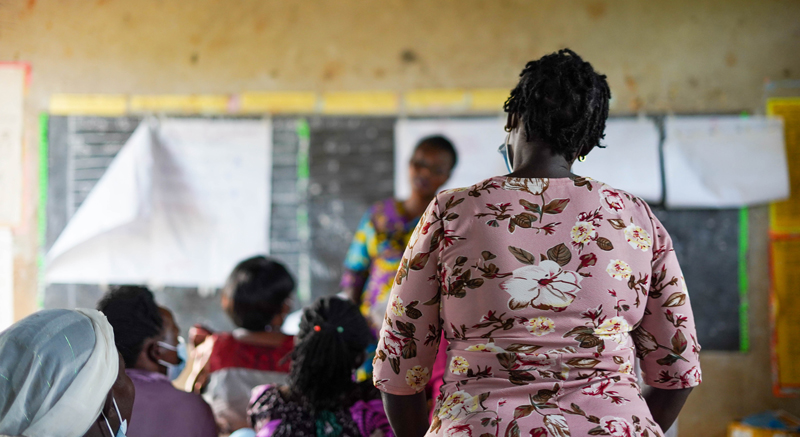
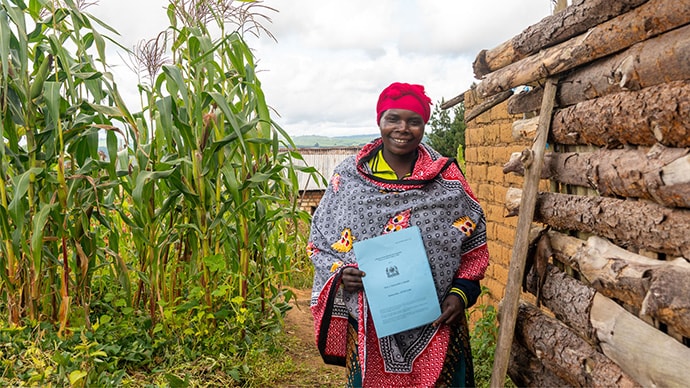
Photo by Deborah Espinosa | Landesa attorney and land tenure specialist

Since 2008, a global land rush—sparked initially by a dramatic rise in global food prices and now driven by a variety of factors including increased demand for food and biofuels, carbon markets, and speculation—has been remaking the face of agriculture and land use in the developing world.

It is generally accepted that increased agricultural investment is needed in order to reduce poverty and hunger in the developing world. However, many international development organizations including Landesa, have expressed concerns that the current nature of these investments, which typically convert the land from traditional uses, such as smallholder farms or communal grazing, to large scale commercial uses, threaten the livelihoods of those whose families have used the land for centuries.  Many newspaper columns have already been filled with stories of families displaced by the transfer of their land for commercial farming, often without consultation or compensation and with devastating effect on their food security and overall wellbeing.

In response to this threat, a long list of organizations–multilateral and academic institutions, social movements and farmer’s organizations, entities within the UN system and advocacy and civil society organizations–have conducted research, organized seminars and engaged in consultations in an effort to establish a set of principles or guidelines intended to manage this wave of investment so that it increases productivity and does not harm local communities.

One such effort has just succeeded: last week the United Nations announced that member governments have approved the Voluntary Guidelines on the Responsible Governance of Tenure of Land, Fisheries and Forests in the Context of National Food Security (“VGs”).

The VGs set forth a long list of guidelines that are intended to lead governments and investors to manage their investments in a way that respects the land and resource rights of local communities, increases agricultural productivity and food security and strengthens the capacity of all involved in the governance of tenure. An underlying goal is to improve the national legal and investment climate so that responsible companies are more likely to achieve financially viable investments.

While adoption of the VGs after a very long process—very capably led by UNFAO, USAID and others—is a significant achievement, there is still much to be done.  First, by their very nature, the VGs are only guidelines.  They are quite general and an enormous amount of work remains to translate them into action.  The UNFAO recognizes this and has already begun the process of creating implementation guides that will help governments, in particular, begin to implement the VGs.  We at Landesa are helping to write the Implementation Guide on Agricultural Investment and Access to Land.

Second, all of the primary stakeholder groups—national and local governments, local communities and their representatives and even the investors—need to improve their capacity to understand and effectuate the VGs.  Based on presentations and discussions at the recently concluded World Bank Conference on Land and Poverty, it is clear that governments and local communities see the need for training, training and more training to enable them to manage the land rush.  Investors, too, acknowledge that they do not completely understand how to invest responsibly.  They seek a “playbook” to help them do so.

Third, it is critically important to improve communication between the stakeholder groups. At the World Bank conference, several private sector speakers bemoaned the continuing “silo effect” that tends to separate them from civil society and governments.  As one speaker observed, there is a need for a “coalition of the willing” that brings together representatives of all groups so they can work together to achieve the goals embodied in the VGs.

To paraphrase Winston Churchill, adoption of the VGs does not represent the beginning of the end or even the end of the beginning of the effort to ensure that agricultural investments benefit governments, local communities and investors.  But it is a good start.


Posted in Food and Agriculture, Land Acquisitions | Tagged , , , , | Leave a comment

A Letter to Mothers in the Developing World

A new mother in Rwanda. Photo by Landesa land tenure specialist Deborah EspinosaA Letter to Mothers in the Developing World,

On this Mother’s Day, Landesa salutes mothers in the developing world – our partners.

We advocate for your land rights not just because it is a good idea – but because it is essential for alleviating poverty.

We know that when you have secure rights to the land that you cultivate, you improve the land, which increases your yields.  We know that you use those higher yields and extra income to meet your families’ needs, boosting family nutrition and health, and ensuring that your children stay in school.

We spend our time in the field listening to you. And from China to Rwanda, and India to Uganda, we hear the same refrain:  you need secure rights to land.

So that your children will have a better future.  A future free of conflict.

And a future full of prosperity.

Mothers, we hear you.

With you and your governments as our partners, we will continue to help you obtain a powerful tool you can use to break the cycle of poverty – secure rights to land.

~ The global Landesa team

Posted in Women's Land Rights | Leave a comment

Women’s land rights and nutrition

While there is no silver bullet to solve global hunger, discussion at the Global Conference of Women in Agriculture (GCWA), held in New Delhi from March 13th to 15th, 2012, pointed to a piece of the solution. In a breakout discussion, participants came to the conclusion that empowering women is the key to improving household access to nutrition.

The question participants left with is how to ensure that women have the power they need to positively influence household nutrition. The Landesa Center for Women’s Land Rights recently released an issue brief that holds part of the answer: secure rights to land.

Despite the fact that women perform over 40% of the world’s agricultural labor,[i]  they are often the main losers of the global food crisis. Because of their relative lack of power, women in food-insecure regions experience higher rates of malnutrition than men. In many of these regions, women experience discrimination starting from birth or even earlier until death. Women often lack the ability to make decisions about food consumption, income expenditure, and even which crops to grow. Even in food secure countries, there is often no relationship between women’s calorie-intake and nutrition[ii] and, in some countries, over 50% of pregnant women are anemic.[iii]

At the GCWA, participants discussed how decisions of intrahousehold dietary allocation and intake are extremely important to reducing malnutrition. The World Food Summit of 1996 defined food security as existing “when all people at all times have physical and economic access to sufficient, safe, nutritious food.”[iv] Often food security is perceived as just having access to sufficient calories, but what families need is access to a fully nutritious menu of food options. Research shows that while male farmers tend to focus on cash crops, women focus on growing crops that provide dietary diversity for the family.[v] When women have more power within the household to decide what to grow, the result is not just increased nutrition for women themselves but increased nutrition for the family in general.

Similarly, when women decide what to consume, household nutrition improves. Women with greater influence over household decisions are more likely than men to make decisions that improve the household’s nutrition,[vi] as women who have control over household expenditures are more likely to spend that income on purchases that benefit the family.[vii] A World Bank report points out that “the income and resources that women control wield disproportionately strong effects on health and nutrition outcomes generally.”[viii] In fact, low-income female-headed households often exhibit better nutrition than higher-income male-headed households.[ix]

Data from South Asia, Sub-Saharan Africa, Latin America, and the Caribbean “leave no doubt that women’s status, both within the household and in the community, plays a positive role in determining child nutritional status.”[x] Women with higher status have better nutrition and enjoy better prenatal and birthing care than those with low status, especially in South Asia.[xi] Their children, in turn, are more likely to be born at higher birth weights and receive better care critical to their nutritional well-being.[xii]

One of the best ways to give women more power in making agriculture and household decisions is by giving them access to and control over land. While women are significantly less likely to own land than men, where women do own land, they are more likely to control income from that land and have higher status. A study in Central America, for example, found that women with formalized land rights are more likely to have control over household income and access to credit.[xiii] In Nepal, researchers found that women who own land are significantly “more likely to have the final say” in household decisions.[xiv]

In fact, even though in general the land women own is usually smaller and of poorer quality than  land men own, [xv]  the direct link between women’s land rights and family nutrition status has been  confirmed repeatedly. Some salient examples:

  • A study in Nicaragua and Honduras found that families spend more on food when the woman of the house owns land.[xvi]
  • A study in Ghana showed that when women own a larger share of the household’s farmland, families allocate a larger proportion of their household budget to food.[xvii]
  • In Nepal, research demonstrated that the likelihood that a child is severely underweight is reduced by half if the child’s mother owns land.[xviii]

As researchers, governments, and international development organizations continue to come together at conferences like the GCWA to discuss the vital role women play in the future of world food and nutrition security, they must consider one of the most promising ways to empower those women: secure access to and control over land. Addressing women’s empowerment will lead to better nutrition outcomes, not just for women themselves but for the family, and eventually the world, at large.


[i] FAO, The State of Food and Agriculture: Women in Agriculture – Closing the Gender Gap for Development 2010-2011, (2012).

[ii] For example, within India, some states with lower caloric intake or economic growth have relatively better nutrition parameters than states with higher calorie intake or economic growth, suggesting that nutrition security is more than just an issue of food security (calories) or income. See Indian National Science Academy, “Nutrition Security for India: Issues and way forward: A Position Paper,” New Delhi (December 2009).

[iii] DeMayer EM and A. Tegman. “Prevalence of Anaemia in the World.” World Health Organ Qlty 1998; 38 : 302-16. (In pregnant women, WHO has estimated 14% anemia in developed countries, 51% in developing countries, and 65-75% in India).

[iv] Rome Declaration on World Food Security, 1996.

[v] R. Mitchell and T. Hanstad, Small Homegarden Plots and Sustainable Livelihoods for the Poor 10 (FAO 2004) (citing studies).

[vi] FAO, The State of Food and Agriculture: Women in Agriculture – Closing the Gender Gap for Development 2010-2011, 43 (2012).

[vii] See World Bank, From Agriculture to Nutrition, supra note vii, at 13 (citing studies showing that women’s income and level of control over income have a “significantly greater positive effect on child nutrition and household food security than income controlled by men”).

[viii] World Bank, From Agriculture to Nutrition: Pathways, Synergies and Outcomes xiii (2007).

[ix] Shenggen Fan and Joanna Brzeska. “2020 Conference Paper: The Nexus between Agriculture and Nutrition: Do Growth Patterns and Conditional Factors Matter?” (Washington, DC: International Food Policy Research Institute, 2011).

[x] L. Smith, et al, The Importance of Women’s Status for Child Nutrition in Developing Countries, International Food Policy Research Institute Research Report 131, 58 (2003).

[xi] Id. at 79.

[xii] Id. at 8-9, 60, 79.

[xiii] E. Katz and J. Chamorro, Gender, Land Rights and the Household Economy in Rural Nicaragua and Honduras 11, paper prepared for the Regional Workshop on Land Issues in Latin America and the Caribbean (USAID 2002)

[xiv] K. Allendorf, Do Women’s Land Rights Promote Empowerment and Child Health in Nepal?, World Development 35 (11): 1980 (2007).

[xv] FAO, The State of Food and Agriculture: Women in Agriculture – Closing the Gender Gap for Development 2010-2011, 23 (2012).

[xvi] E. Katz and J. Chamorro, Gender, Land Rights and the Household Economy in Rural Nicaragua and Honduras 11, paper prepared for the Regional Workshop on Land Issues in Latin America and the Caribbean (USAID 2002) at 15.

[xvii] C. Doss, The Effects of Intrahousehold Property Ownership on Expenditure Patterns in Ghana, J. Afr. Econ 15(1): 149-180, at 171 (2006).

[xviii] K. Allendorf, Do Women’s Land Rights Promote Empowerment and Child Health in Nepal?, WORLD DEVELOPMENT 35 (11): 1985 (2007).

Posted in Health & Nutrition, Women's Land Rights | Tagged , | Leave a comment

Social Entrepreneurs “Refreshingly Uncynical” — But Not At All Delusional (guest post)

Sally Osberg, CEO of Skoll FoundationPartner post by Sally Osberg, CEO of Skoll Foundation. This article originally appeared on the Huffington Post.

Just as I was coming up for air after our ninth Skoll World Forum, held each spring in the U.K. at Oxford University, David Brooks’ New York Times column on social entrepreneurs hit my desk. Talk about timing!

For starters, Mr. Brooks cites coffee shops, universities and “a certain sort of conference” as fertile ground for bumping into “some of these wonderful young people who are doing good.” Big note to self: be sure to invite him to the Forum next year. Not only would this global community of 900 delegates welcome his savvy perspectives, he’d discover just how many social entrepreneurs are actually doing what he thinks they aren’t.

In his provocative piece, “Sam Spade at Starbucks,” Mr. Brooks attests to the appeal of the “refreshingly uncynical” women and men he considers social entrepreneurs. But they’re missing a big beat, he believes, by shunning government, and by thinking “they can evade politics” in their pursuit of social progress. Our experience at the Skoll Foundation suggests otherwise.

So, with all due respect, allow me to take up Mr. Brooks’ gauntlets.

Contrary to his concern that “you can cram all the nongovernmental organizations you want into a country, but if there is no rule of law… your achievements won’t add up to much,” in fact, many social entrepreneurs are directly and indirectly supporting the rule of law. Landesa, for example, a new addition to the Skoll Foundation portfolio, works with governments in 40 countries to transfer property rights, which ultimately bring food, income, and the opportunity to transcend poverty. In India, for example, a local state government worked with Landesa to educate women about their land rights and help them through the land-application process. Already, 100 women in that small area have their land titles. They are counted among the 105 million families who have received land rights because of Landesa’s government partnerships.

Mr. Brooks is concerned that social entrepreneurs have “little faith in the political process.” But a number of organizations work with a “healthy political process.” Camfed (the Campaign for Female Education) partners with the Zambian government to enforce child protection as a cornerstone of its education plan. (In Africa, it’s common for teachers to pressure their female students to have sex with them). Now, 1,500 schools have these plans in place. The real social progress? Experts agree the best way to bring lasting social benefits to a country is to expand educational and economic opportunities for girls. In total, Camfed has given grants to 60,000 girls to complete secondary school.

While Mr. Brooks thinks young activists are “not as good at thinking nationally and regionally,” Partners in Health (PIH) is doing just that, by partnering with the governments of Haiti and Rwanda to ensure sustainable access to first-class medical care. In Rwanda, the year-old Butaro Hospital is a collaboration between PIH and the Ministry of Health. It provides salary incentives and extensive training to healthcare workers. In Haiti, PIH will soon open Mirebalais Hospital, which former President Bill Clinton recently visited. PIH is also helping the Haitian Ministry of Health develop an immunization program to protect all Haitians against cholera, which has already killed more than 7,000 people.

Mr. Brooks says “There’s only so much good you can do unless you are willing to confront corruption, venality and disorder head-on.” He says social entrepreneurs rarely talk about “honest courts.” However, theInternational Center for Transitional Justice (ICTJ) has taken its innovative methodology global, bringing transitional justice specialists and practitioners together from diverse contexts to share knowledge, offer comparative advice and technical assistance, and build local capacity.

ICTJ has helped create transitional justice systems in more than 35 countries, healing millions of human beings who thought they were beyond redemption. Most recently, they are making sure that countries like Lebanon have a way to find their missing. (An estimated 17,000 people went missing in Lebanon during the civil war). The High Court in South Africa issued a temporary interdict preventing the president from granting pardons to political perpetrators without consulting victims. ICTJ was at the center of making this happen.

In sum, effective social entrepreneurs are what the late John Gardner called “tough-minded optimists.” Every bit as hard-headed as the dashing Sam Spade, they know that social justice depends upon citizens capable of claiming their rights — and governments capable of delivering.

Posted in Policy reform, Social Entrepreneurship | Tagged , , , | Leave a comment

How women can help solve the global food security problem

Asira

Asira working on her farm. Photo credit: Deborah Espinosa

This blog originally appeared on the ONE Campaign blog.

Four years ago, Asira Nzamwitaakuze, a Rwandan farmer and mother of four young children, more than doubled her harvest when she gained a powerful tool not normally kept in a barn or tool shed.

Her tool? A land title.

This single piece of paper gave Asira the security of knowing that her rights to the land were protected by law, and the confidence to use more expensive, quality fertilizer on her land to improve it and boost her harvests and income.

Women farmers like Asira already produce nearly half of the food grown in the developing world, often without the benefit of legal control over the land they farm, or the security such control brings.

Research shows that, like Asira, they can significantly improve their harvests if they have secure land rights.

This potential for female farmers to help address the food security challenge is finally gaining attention as evidenced by a flurry of new infographics on the subject by FAO and Farming First, the Bill & Melinda Gates Foundation, and USAID and this new food security issue brief by Landesa.

Importantly, when women have secure rights to land, studies indicate, the impact isn’t limited to fuller granaries:

Family nutrition and health improves
• Women are less likely to be victims of domestic violence
• Children are more likely to receive an education and stay in school longer
• Women may have better access to micro-credit, as Asira highlights in the video below
• Women’s participation in household decision-making increases

For a sense of how fundamentally this can change life for a farmer, her family, and her community, watch this five-minute video which spotlights the impact of Landesa’s partnership in Rwanda:

During Landesa’s decade of work in Rwanda, which continues today, the organization’s economists, attorneys and other experts advised on land laws, and developed and piloted legal aid and education programs to ensure that women understood and could benefit from the nationwide documentation of land rights.

Asira, whose family had been tilling the same patch of ground for generations but without legal proof of their land rights to or any way to legally defend those rights, received title to her hillside plots as part of a Landesa-supported government program.

Posted in Food and Agriculture, Women's Land Rights | Leave a comment

The next crop of landowners

Meet the women in Odisha, India who have been approved to receive titles to their own plot of land. Click on the photos below to begin this photo essay with captions.

Landless women who will soon receive new plots of land

These women in Odisha, India, have been approved to receive titles to land, thanks to the work of India’s first Women’s Land Rights Facilitation Center, which opened on International Women’s Day one year ago.

New land title holders in Odisha

These women were poor, landless, and desperate. Money was so scarce; many of them had to send their children off to work as soon as they were physically able. And even then, they struggled with hunger.

Women with government officials showing their new land plots

Founded by the Odisha State government, the Center’s staff educate women about their land rights and help them through the application process to obtain land. Now more than 100 women from their community have been approved to obtain title to land, and can take the first step to climbing out of poverty.

Kuni

Kuni, 33, is a single mother who spends almost half of her daily wages on rent for a room for her and her children (a 10-year-old daughter and a 12-year-old son). She barely manages to get food on the plate. With land she hopes to build her own small home and grow a kitchen garden, saving what she earns for a better future.

Sabita

Sabita, 32, is a mother to twin daughters and lives with her father. Her children are the light of her life and she is struggling to keep them in school. She says having her own land will give her and her girls a more secure future.

Kuntala

Kuntala looks much older than her 35 years. “Food is a daily struggle and depends on my son finding daily work,” she says. With most of what her son brings home going for rent, she hopes a land title will allow her to build a hut and have more food on the table.

Subha with her daughter Jhunu

Subha, 55, lives in a small hut with her divorced daughter. Without land she worried about how she and her daughter would survive and stay safe. Now, they both dream of building a better life after getting a land title.

Reena

Reena, 22, lives with her terminally ill husband and two young children in a dilapidated hut. She is looking forward to the opportunity to grow food for her children on her own patch of land.

Abanti

Abanti, 40, crushes stones all day long at a quarry to earn approximately one dollar. With this dollar she must support her family of three. She smiles at the thought of living on land she can call her own.

Landless women who will soon receive new plots of landNew land title holders in OdishaWomen with government officials showing their new land plotsKuniSabitaKuntalaSubha with her daughter JhunuReenaAbanti
Posted in Women's Land Rights | Tagged , , , , | 5 Comments

Change requires a movement

Kiramatisho | Photo by Deborah Espinosa

Learning about gender equality and women’s rights to land under Kenya’s new Constitution made Kiramatisho, an elderly Maasai women, wish that she was young again. © Deborah Espinosa

I have been working on issues related to women’s secure rights to the land they farm for over 15 years, and sometimes I marvel that my passion for this work has not waned, even in the face of what sometimes seems like intractable social and cultural constraints.  My level of hopefulness rises and falls, to be honest, but my passion only increases.  Why?  I have never met a rural woman who depends on agricultural labor for a living who did not want a parcel of land of her own.  And women who have land, no matter what the size, often speak about the benefits in terms of improved and increased nutrition for their children, and being able to pay school fees—two things I care about deeply.

Still, it’s a daunting task.  Poor women are economically and physically vulnerable.  Sometimes, it’s cultural norms which create or sustain barriers to women’s land rights, such as those related to:

  • marriage (like living arrangements and dowry or bride price);
  • who is able to go to public offices and meetings;
  • what household labor men and women do and what time of day that labor is required; and
  • who is educated within a family.

All of these things can affect women’s ability to own or have control over the land they farm.

But don’t throw your hands in the air, there’s work to do!  If we want to reduce poverty and hunger for men, women, and children, we have to deal with issues of access to and control over resources, and most especially land.  Yes, it’s hard and there are few easy solutions.  Rather than give-up, women must organize, stand-up, and say ENOUGH.  Cultural and far-reaching change requires a movement.  Labor movements, civil rights movements, anti-apartheid movements have worked because enough people stood up and said “no more!”  We need to say no more—no more working as agricultural laborers on our own family’s land without any decision-making power.  No more titles to land given in the name of men only.  No more depending on men to tell their wives about government programs to distribute land.  No more uninformed government officials and judges, who don’t know how laws related to dowry, inheritance, co-ownership, and polygamy affect women’s rights to land.

In 2009, Landesa (then RDI) launched the Landesa Center for Women’s Land Rights (LCWLR) to focus on raising awareness, building capacity, and addressing the gap between law and practice; it is from this entry point that we work towards gender equitable land rights as a means to fight poverty.  We are collecting family laws, information about marriage and family customs, and articles and tools to help us do this work.  Our digital library, LandWise, will launch toward the end of this year.  We are training lawyers and working with gender specialists who care about land issues from around the world.  We are looking at Landesa’s own land programs and understanding how they may have a different impact on men than they do on women if we don’t make a special effort to reach out to women.  We are helping governments make sure their laws are truly equitable for women and men.

In developing countries, rural women farmers without secure land rights lack the resources needed to feed their families, educate their children, and break the poverty cycle.  On International Women’s Day, 2012, more than 100 years after the first one, I really don’t see how we can continue to discuss global development without addressing this fundamental issue of women’s land rights.

Landesa Center for Women’s Land Rights

An initiative of Landesa, the Center for Women’s Land Rights champions the untapped potential of women and girls to transform their communities.  With secure rights to land, women and girls can improve food security, education, health, and economic development for themselves and their families. Learn more

Posted in Women's Land Rights | Tagged , , | Leave a comment

A Plot of Land, a Path to Freedom

Zack Foreman was among the wealthiest men in the West during the 1890s. He had his own private railroad, herds of cattle, and a lucrative deal with the Kansas City Southern Railroad company. But what makes him so remarkable is that Foreman was born an African American slave.

Many of the details of his life have been lost to history, but it would be a shame if the lessons embodied by his success followed the same path. Because though torn from the pages of African American history more than a century ago, his success spotlights a crucial lesson for today’s efforts to address global poverty.

Foreman’s story turns on the accident of his birthplace. He was born into a slave family on Cherokee Territory and as a result of a treaty between the US and the Cherokee tribe, was entitled to claim vacant land upon gaining his freedom at the close of the civil war. This opportunity for land ownership was denied to the vast majority of the other four million freed slaves across the South when the promised “40 acres and a mule” plan was scrapped.

Henry Louis Gates and Dalton Conley have long associated the failure to grant freed slaves their “40 acres and a mule” with the persistent wealth and multi-faceted socio-economic gap between black and white America.

Now an analysis of census data by economist Melinda Miller further highlights this missed opportunity by making clear that land ownership provided a key foundation for former slaves in Cherokee territory to bootstrap themselves out of poverty.

The impact was profound, Ms. Miller has found. Freed blacks in Cherokee territory who obtained farmland were better educated, more likely to own their own home, and make investments in whatever property they did own, than freed blacks across the South who did not have claim to land.

Land ownership or the absence of it, helped determine the trajectory of not only these individuals but also the history of our nation. And it continues to exert this power around the world.

Consider this: the vast majority of the world’s one billion poorest citizens share two key traits. They depend on agriculture to survive, and yet they don’t have legal rights to the land they till.

These landless poor are often trapped in positions that should sound familiar to anyone with even rudimentary knowledge of African American history. They are often sharecroppers, indentured servants, or day laborers.

In Pakistan, millions of haari, or landless peasants, have no ability to negotiate a fair salary from their often-exploitative employers. In India, millions labor in fields owned by others for pennies a day. In rural Africa, at least 428 million people are vulnerable to being pushed off their land by stronger neighbors or—increasingly—outside investors, because they have no rights to their land.

While 40 acres and a mule are no longer feasible given current population densities and budgetary concerns, Foreman’s path out of poverty is no less valid.

Africa’s farming families can be provided with formal rights to the government land they currently till in ways that are market-friendly.

In countries such as Pakistan, where there are large numbers of completely landless laborers in agriculture, there is often also government-owned land that can be divided into small plots and transferred to these poor families. Where appropriate public land does not exist, private land can be purchased on the market.

Our research shows that owning a patch of land as small as one-tenth an acre (about the size of a tennis court) can provide benefits to completely landless families. In India, these micro-plots have been successful in allowing thousands of families to send their children to school, negotiate fair wages, and grow a kitchen garden. Such programs should be replicated and expanded.

With technical and financial assistance, governments can expeditiously and inexpensively develop their own solutions to ensure that poor families gain legal control over land to break entrenched poverty cycles.

A good example of this is in Rwanda. With the help of experts on loan from Britain and the US (including my organization), the Rwandan government drafted new land policy and laws, launching the process of formalizing farmers’ legal claims to land. The farmers we’ve visited are now investing their labor and money to improve their land and seeing their harvests grow.

So as we celebrate African American History month, let’s pause to consider the lessons learned. Having failed to act during the critical window of opportunity—when we were still an agrarian nation where opportunity and wealth were closely tied to land—the US must now wrestle with a far harder proposition: how to provide meaningful opportunity to a largely dispossessed underclass. But we can make our current global development investments and interventions more effective by ensuring that the still largely agrarian developing world seizes the opportunity to address one of the root causes of the poverty trap: landlessness.

This post originally appeared on the Stanford Social Innovation Review blog.

Posted in Policy reform | Leave a comment

Land rights for women – a ripple effect

People often question Landesa’s emphasis on women’s land rights in our work, from China and India to Rwanda and Kenya.

Why do women need secure rights to land if their husbands already have such rights?  Do we have something against men or male farmers?  Do we think women are better farmers?

All good questions.  For good answers, meet Rwandan farmer and father of five children, Jean Habumukiza.  Jean and his wife grow corn and sweet potatoes on a few tiny plots of land in far northern Rwanda, in the lush foothills near Volcanos National Park.

From 2002 through 2009, Landesa partnered with the Rwandan government to help ensure that Rwandans would have secure rights to land and receive land titles.  In this case, both husbands and wives’ names were included on titles and communities – both men and women again – learned about the process for and significance of getting a land title.

On my recent visit, Habumukiza shared how his family’s life has changed since they received title to their land:

  • They started using fertilizer and tripled their yield of corn.
  • They used the land title to obtain a loan from the bank, which they used to pay to connect their home to the nation’s electrical power grid.
  • They no longer have to waste money in the court system to defend the property from opportunistic neighbors eager to grab a few feet of their patch of land; a regular occurrence in the days before they had titles.
  • Their children (ages 8 to 21) have better prospects now that they can complete their homework at night (thanks to the electricity) and will be able to pay school fees (thanks to the bumper harvest).

But there is another impact he highlighted emphatically during our talk:

“I feel secure and my wife feels secure too, because the women never used to have land. But now my wife owns 50 percent and I own 50 percent,” explained Habumukiza. “I am not worried, now. Even if I die, my wife and children can remain on the land. Because they are also written on the land title.”

Many developing countries, from Liberia to India, are rife with women without land rights, who upon the death of their husbands are thrown off of their land and left with no way to support themselves or their children. National economies continue to suffer from the effects of these children robbed of an education and a future.

“Life has changed for my family, “ said Habumukiza. “Previously, my wife had no claim to the land. But now my wife has 50 percent share and I think our relationship is better, because everyone has a say on the land.”

Now, says Habumukiza, they make decisions together. And he and his neighbors told me that because decisions are made by two people, they are more informed and less impulsive – often that means he and his wife make better decisions.

So for Habumukiza, women’s land rights is a practical matter. For him, it’s not about ideals of equality; it’s not about women’s liberation. It simply is what will help his family in the short- and long-term.

Of course, the ideals of equality and women’s liberation are laudable and reason enough to support the promise of women’s land rights. But in interview after interview with Habumukiza’s neighbors, I found that the poor often have an entirely different set of reasons – mostly based on practicalities – for supporting women’s right to land.

His neighbors like, Fabien Ngendahimana, father of eight, echo this perspective.

“Before, it was easy for a man to go to the bank and sell off his land without his wife even knowing,” said Ngendahimana. “But now life has changed. But now even the crops we plant on the land my wife and I agree on. Previously our way of doing things was dishonest. Before we wasted our money and wasted our land.”

Without prompting, these men challenge those who see women’s rights as a zero sum game, those who fear that helping women get stronger makes men weaker, that supporting women farmers undermines male farmers, that women’s rights is a luxury that the poor cannot afford.  Instead, the Rwandan men with whom I spoke in this far northern corner of the country explained that women’s land rights are something they and their families simply can no longer afford to live without it.

This article originally appeared in Next Billion February 6, 2012. Please follow Deborah Espinosa on Twitter: @deb_espinosa

Posted in Women's Land Rights | Tagged | Leave a comment

China: One fire may be out, but tensions over rural land rights are still smoldering

After months of protests and rioting in the small Chinese village of Wukan, life is returning to normal. As roadblocks are removed and daily life returns to its pre-riot rhythms, it is tempting to think that a crisis has been averted.

But the restoration of calm in China’s southeast should not obscure the fact that the same tinderbox that allowed Wukan to erupt (the confiscation of farmer’s land without fair compensation) is present in thousands of villages across China. The scale of this problem makes China’s rural land tenure issues and their impact on food security and stability a matter of both domestic and global concern.

While the arc of Wukan’s story is unusual, the underlying issues are not: Late last year, villagers began a standoff with local authorities. Villagers  protested local officials confiscating farmers’ land and selling it to developers without giving the farmers proper compensation. As a result of the protests and mass civic engagement, higher authorities stepped in and promised an investigation, and free and fair local elections.

Consider the fact that across China each year, approximately 4 million rural families lose their land to local governments and well-connected developers – often without compensation or consultation, as was the case in Wukan.

This further exacerbates the rural-urban divide in China that has left the majority of China’s 700 million farmers embittered and living on less than $2 a day and lagging far behind their urban counterparts in schooling, health care, and other socioeconomic indicators.

These disenchanted and dispossessed farmers are an extremely destabilizing force across China. Indeed, in 2010 alone, according to Chinese researchers, 187,000 “mass incidents” (demonstrations or riots) erupted across the country – 65 percent of them related to land disputes.

And the problem is only growing worse as a new survey of 1,791 farmers across 17-provinces indicates.

The pace of rural land grabs in China is increasing steadily, our survey shows. Almost half of all villages surveyed reporting that they have experienced land takings. In more than one-fifth of these takings, farmers have yet to receive any compensation whatsoever. When farmers did receive compensation for the loss of their land, it usually amounted to only a small fraction of the land’s true value.

Even China’s many new “urbanization programs,” created to increase agricultural acreage by moving farmers to the city, razing their rural homes, and returning these housing plots to agricultural production, have not helped. In China’s overheated land market, these programs have become a tool and opportunity for developers. In fact, in more than half of these cases farmers report that they actually lost both their farmland and home in the process.

Moreover, the vast majority of these “urbanized” farmers have not become full-fledged urban citizens, receiving neither urban status nor the highly sought-after urban benefits they hoped to gain through the deal with local authorities.

This land tenure insecurity has left China’s farmers poorer and reluctant to invest in their land and maximize their harvest. The end result: slower rural development, exacerbating China’s already gaping and destabilizing urban-rural income gap, and ensuring harvests that fall far short of their potential.


Chinese Premier Wen Jiabao has recognized the importance of protecting farmers’ land rights – as they impact continued stability, rural development, and food security. In a December address, Mr. Wen delivered one of the strongest statements in memory by a top Chinese government official on the protection of farmers’ land rights.

Farmers, Wen said, had undeniable legal rights to the land they till, although across China the land is technically owned by village collectives. He went further to say China’s tremendous economic development over the last couple of decades has too often come at farmers’ expense.

Protecting farmers’ land rights in the midst of the largest urbanization process ever seen in history obviously will require a fundamental shift in national development strategy, in thinking about rural-urban development, in local government financing issues, and in land legislation and policies. This is particularly tricky in the coming year as China navigates a transition to a new leadership.

But it is critical.

As always, land is the fulcrum upon which Chinese history pivots. And because China is the world’s factory floor, its internal stability matters greatly to the global economy as well.

China’s central government has, as Wen’s recent remarks indicate, started to address the problem. One of the programs it has launched is a land registration pilot program to ensure that every farmer’s land tenure claims are registered. These pilot programs must be closely monitored and accelerated. This program could help further rural development and stability if it is implemented in an equitable and participatory manner.

More can be done, including: reforming the law on land takings to improve compensation and due process by requiring local officials to provide farmers with at least the required level of compensation and a court order before evicting farmers. Reforms must be implemented rigorously and effectively and any new programs should be aimed at increasing farmers’ awareness of their rights and their ability to exercise those rights. And all of these programs and institutions have to be designed in a way that works at the local level.

Amidst all of the uncertainty, one thing remains clear: China has better prospects of restoring harmony and creating broad-based and sustainable prosperity when farmers’ land rights are better secured – a recipe for the a true great leap forward.  And what’s good for China is good for the world.

This article originally appeared in the Christian Science Monitor on February 6, 2012. Yu Gao is China Program Director for Landesa. Please follow us on Twitter: @Landesa_Global

Posted in Policy reform | Tagged , , , | Leave a comment

From Our Blog

Darryl Vhugen

Next steps to put voluntary guidelines into action to address the global land rush

Since 2008, a global land rush—sparked initially by a dramatic rise in global food prices and now driven by a variety of factors including increased demand for food and biofuels, carbon markets, and speculation—has been remaking the face of agriculture …
Read More

Deborah Espinosa

A Letter to Mothers in the Developing World

A Letter to Mothers in the Developing World, On this Mother’s Day, Landesa salutes mothers in the developing world – our partners. We advocate for your land rights not just because it is a good idea – but because it …
Read More

Amanda Richardson

Women’s land rights and nutrition

While there is no silver bullet to solve global hunger, discussion at the Global Conference of Women in Agriculture (GCWA), held in New Delhi from March 13th to 15th, 2012, pointed to a piece of the solution. In a breakout …
Read More

On Twitter