


By Racheal Kisiangani & Leslie Hannay
As we explored in a recent blog, conflict over land-based investments rarely starts with the contract. It starts much earlier, with who was consulted, who was heard, and whether concerns were taken seriously.
How an investor handles these questions often determines whether an investment becomes a durable partnership or a costly dispute. Kenya’s drylands are attracting growing interest from investors in renewable energy, carbon, conservation, mining and agriculture, often on community lands that are critically important for grazing, water and seasonal livestock movement. Kenya’s laws recognise community land rights, but there is little practical guidance on what good engagement looks like on the ground: who an investor should speak to first, how a community decides who speaks for it, and what must happen before an investment moves forward.
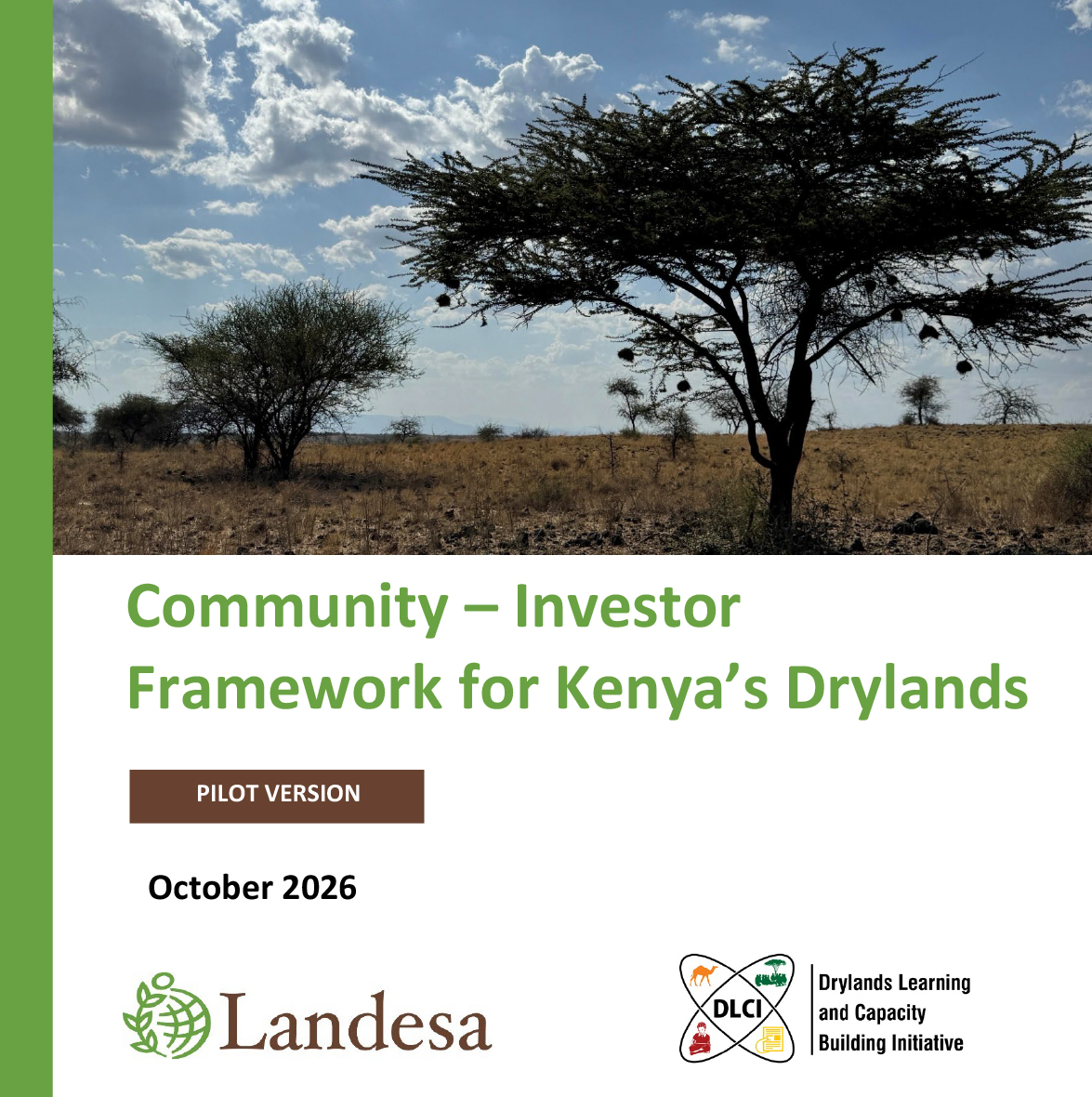
Landesa and the Drylands Learning and Capacity Building Initiative (DLCI) have developed the Community–Investor Framework for Kenya’s Drylands to help fill that gap. The Framework translates these concerns into practical guidance for communities, investors, government and other actors involved in land-based investments.
What the Framework does
The Framework outlines seven phases of engagement: introduction; due diligence; expression of interest; community preparation and mobilization; free, prior and informed consent (FPIC) and negotiation; agreement and implementation; and monitoring, reporting and exit. At each phase, it identifies issues that users need to consider. An investment screening checklist and a gate-decision summary help users assess whether key requirements have been addressed, identify outstanding issues, and inform decisions about whether and how an investment should proceed.
One principle runs through every phase: participation is not consent. A community that has taken part in discussions has not endorsed an investment, and acceptance is never presumed. Where consent and representation are unresolved, the right answer may be to pause, rethink, or walk away.
Consider a proposed investment on land used seasonally for grazing. Screening flags that use early and raises the questions that matter: whose access would be affected, and whether those users are represented. The answers can reshape the proposal before anything is decided. The Framework brings these issues into a clear sequence, so they are raised while they can still shape the outcome, not after positions have hardened. It complements applicable laws and statutory requirements rather than replacing them.
The Framework can be used for new investments and those already underway, where it can help users identify gaps in engagement, decision-making and safeguards, and determine what further action may be needed. It’s important to note that when applying the Framework to an investment already in process, any steps that were missed must be revisited. Gaps in engagement, and the appropriate response, must be assessed in the context of the investment.
What comes next
This is an early release, shared now so that the Framework can be applied, tested, and improved in practice. Landesa and DLCI are piloting the Framework in selected communities in Isiolo and Samburu counties to examine how the phases work in live investment processes: whether the guidance is clear, whether responsibilities are understood, what implementation challenges arise, and where additional tools or changes may be needed. The pilots are open to new sites, and we are particularly interested in hearing from investors who would like to apply the Framework. Communities, county government actors, and relevant organisations are also welcome to partner with us.
Lessons learned will be used to refine the Framework, and updated guidance will be shared through the Framework’s project page. In the longer term, Landesa and DLCI aim to work with government to explore how the refined Framework could inform national and county policy guiding land-based investments in both public and private projects.
No framework can prevent every dispute. But it can make sure the questions that matter most (who is included, who is heard, who decides) are asked at the start, not argued over at the end.
Access the Community-Investor Framework for Kenya’s Drylands on our project page, and follow along for more updates on the Framework, pilots and other developments:
www.landesa.org/resources/community-investor-framework-kenya-drylands
For more information, enquiries about participating in the pilots, or feedback from applying the Framework, contact:
- Racheal Kisiangani (rachealk@landesa.org)
- Leslie Hannay (leslieh@landesa.org)
- Bilach Jimale (bjimale@dlci-hoa.org)
Related blogs
Strengthening Land Rights to Address Climate Change ‘Loss & Damage’
Land rights are a foundation for climate justice and a necessary counter to loss and damage, helping build resilience among those disproportionately impacted by climate change.
October 26, 2026
Climate Action in Africa Must Protect Community and Women’s Land Rights
For communities across Africa, a land deed means a stronger voice in decisions about its territories and natural resources. Landesa and RRI are urging the African Court on Human and Peoples’ Rights to affirm that climate efforts must respect the land rights of communities and women across Africa.
September 22, 2026
Ways to strengthen women’s land rights in agricultural projects
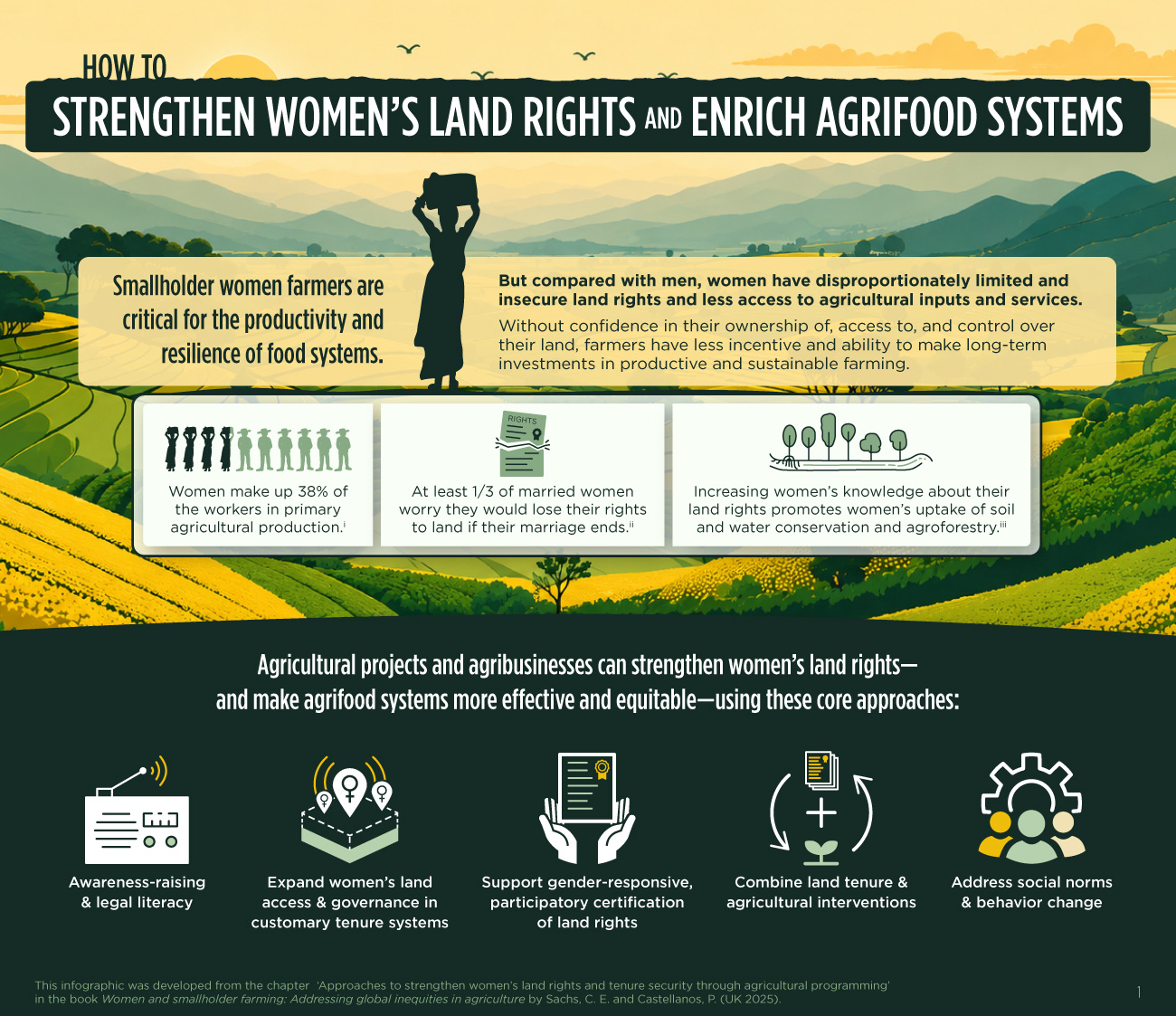
Five tested approaches show how agricultural projects and companies can strengthen women farmers’ land rights while advancing sustainable agriculture, food security, and women’s economic empowerment.
August 10, 2026
