


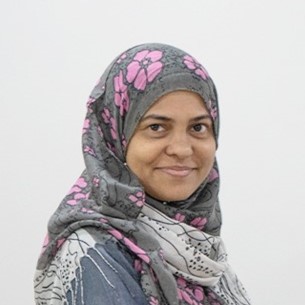
Q&A With Muna Mohamed
Executive Director of Land Sea Maldives
In this interview, Muna Mohamed is being interviewed by Landesa’s sustainable land use and livelihoods specialist and project technical lead Corey Creedon.
Land Sea Maldives is an NGO committed to promoting good governance and community-based natural resource management, advocating for rights related to food security, healthy living, and economic empowerment. Emphasizing sustainable and equitable resource use, we work with local communities, governmental bodies, and international partners on projects that promote livelihood opportunities, enhance environmental conservation, and build community resilience. Through the Women-led Collective Advocacy for Climate Action Project, we aim to strengthen civil society organizations (CSOs) by forming the CSO Coalition for Climate Action, focusing on women's leadership to advocate for sustainable atoll land use, community land rights, biodiversity protection, and improved women's livelihood opportunities.
Q: What are the key climate-related risks faced by communities and in particular women in your country?
The Maldives faces significant climate-related risks due to its low-lying geography; with over 80% of the land area less than one meter above sea level, rising sea levels stand to be a great threat to the very existence of the nation. Furthermore, communities in the Maldives face an increase in extreme weather events, such as heavy rainfall, flooding, extreme heat, drought, and cyclones, which intensify the challenges they encounter. The effects of climate change have also brought significant damage to key biodiversity that local communities depend on, including mangroves, reefs, and lagoons. These impacts disproportionately affect rural women, who often depend on climate-sensitive resources for livelihoods like subsistence farming, home gardening, and fish processing. With many men migrating for work, women often head households that are generally poorer, lack stable income sources, and are more vulnerable to climate impacts.
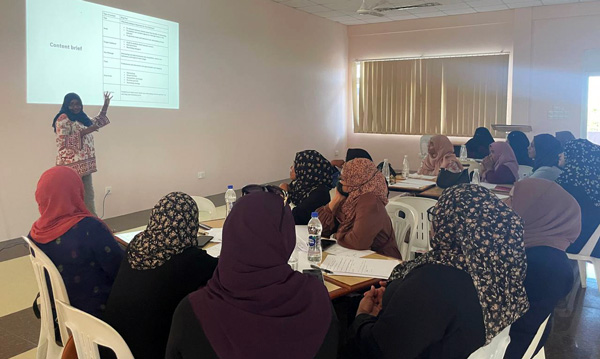
Women's Entrepreneur Workshop in Gdh. Thinadhoo held to create opportunities to develop sustainable livelihood opportunities for women, through fostering entrepreneurial skills
Q: What role do land rights and sustainable land-based solutions have in combatting these challenges?
Community ownership of natural resources empowers climate resilience in the grassroots. It is crucial to focus on land rights to ensure sustainable land use, protect key biodiversity, and benefit local communities through effective governance structures. Community-led ecosystem management is another key strategy for boosting climate resilience: by engaging local communities in the stewardship of their natural resources, we can ensure management practices are sustainable and tailored to the specific needs of the area. This participatory approach helps protect livelihoods and promotes the adoption of practices that mitigate climate-related risks.
To address the challenges faced by women, particularly in small island communities who are highly vulnerable to climate change, our approach focuses on enhancing women's leadership and decision-making roles to ensure their land rights are secure. Women’s leadership is crucial as it not only leads to more inclusive and effective management of resources, but also improves climate resilience. In our advocacy efforts, we aim to highlight the key link between land governance and rights to climate resilience in implementing inclusive and sustainable land utilization practices.
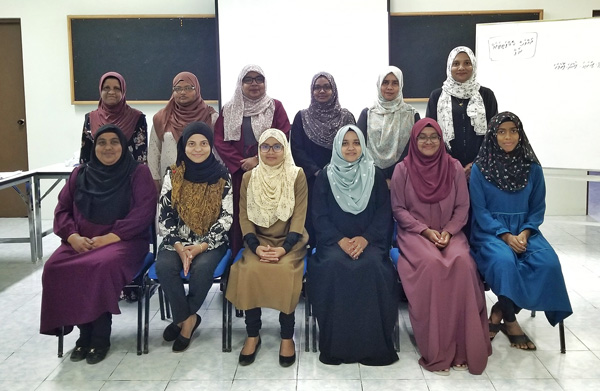
Muna with KF WDC
Q: Explain the work of this project and the approach of working with coalitions, capacity building, and advocacy. What makes this approach so meaningful or impactful?
At a significant time when civil society space is shrinking, the coalition aims to collectively work to support the different contexts and geographies in which different communities react to climate change and subsequent impacts. The coalition allows meaningful exchange of knowledge and offers an avenue for collaboration especially towards capacity building and advocacy—otherwise not possible. Prior to the coalition building efforts through the project, CSOs were only engaged on occasion, while now it is a sustained effort.
Q: How have coalition building and collaboration helped to advance your work?
Coalition building has allowed us to connect with different organizations dispersed across the Maldives in areas of information sharing and strategizing in a more holistic manner. It has also had a significant impact on the implementation of activities in different locations, through building connections with the local CSO partner and facilitating this connection as a means of connecting with the local community. This has helped us to better understand community needs in implementing activities aligning with the Gender Equality and Social Inclusion (GESI) approach and leveraging Indigenous knowledge. Likewise, collaborating with the local councils and the Women’s Development Committees (WDCs) has allowed us to gain an understanding of the issues faced in community organization and integrate these into planning advocacy and capacity building activities. Working with the WDCs has helped us take steps to improve civic participation of women and encourage women’s leadership in climate action agendas.
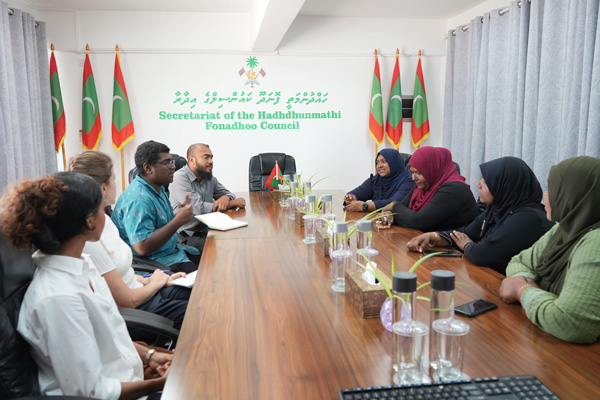
Meeting with the Women’s Development Committee in Laamu Fonadhoo to build a collaborative relationship with the WDC and understand the challenges they face.
Q: A cornerstone of this project is to advance women’s leadership in climate action and to strengthen and sustain women-led civil society organizations. Can you reflect on that approach and why it is important to center women’s voices in collective action on climate change?
Centering women’s voices in collective action is crucial as it takes active steps to advance gender equality. Not only does this approach ensure women’s active participation in civic spaces but it takes a step further to promote and encourage women to take on leadership roles. The CSO coalition for climate action has created a unique space for growth and development of organizations, leading to more community leaders advocating for climate action and women’s land rights. As advocates and community leaders, it is imperative we recognize the importance of addressing gender inequality in our society and taking active measures to empower women.
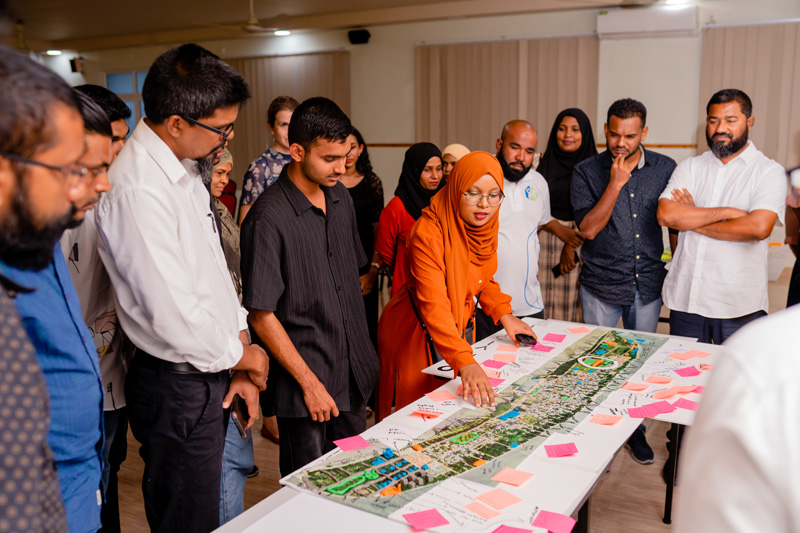
‘Laamu Vision’ youth camp: strengthening coalition partners' capacity to engage with the community, promoting sustainable land use decisions, and fostering youth leadership
Q: What is one piece of advice you would offer to other organizations interested in working at the intersection of climate, gender, and land rights?
Build community support through coalition efforts, as local CSOs are often seen as unimportant unless they have resources similar to a local authority to support the community. This expectation often arises from a general lack of trust in local authorities, projected onto local CSOs who engage as intermediaries. Coalitions can support local CSOs through sharing of resources and support in implementing projects.
This is one of three Q&A's with the national coalition leads from our Women-led Collective Advocacy for Climate Action project in Bangladesh, Nepal, and Maldives. Read the other two blogs:
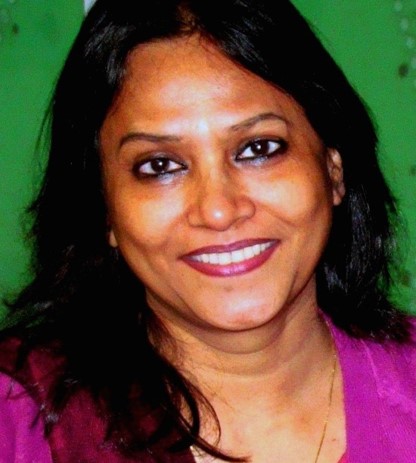
Rowshan Jahan Moni is the Deputy Executive Director of Association for Land Reform and Development. ALRD is a national advocacy and networking organization in Bangladesh dedicated to advancing land rights and agrarian reform. ALRD empowers marginalized communities by advocating for their access to and control over land, water, forests, and natural resources.
Read Moni's Q&A
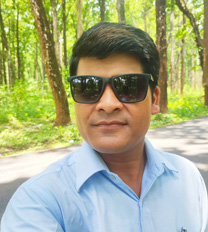
Prem Prakash Nepali is the Program Manager of National Land Rights Forum. NLRF is dedicated to a self-reliant and dignified life for landless individuals in Nepal by advancing the organized power and ideological capacity of land-deprived communities to claim land rights at all levels. NLRF uses policy advocacy, issue-based campaigns, and facilitation of enabling policies to increase access to and ownership over land.
Read Prem's Q&A