


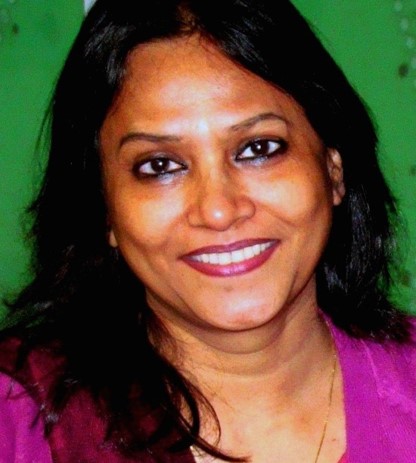
Q&A with Rowshan Jahan Moni
In this interview, Rowshan Jahan Moni is being interviewed by Landesa’s sustainable land use and livelihoods specialist and project technical lead Corey Creedon.
Established in January 1991, the Association for Land Reform and Development (ALRD) is a national advocacy and networking organization in Bangladesh dedicated to advancing land rights and agrarian reform. ALRD empowers marginalized communities by advocating for their access to and control over land, water, forests, and natural resources. Under the Women-led Collective Advocacy for Climate Action project, ALRD works with marginalized communities in four locations in Bangladesh, including support for landless women and the Indigenous Munda community. ALRD builds the capacity of communities to address climate change adaptation, disaster risk reduction and advocates with local government bodies, especially Union Disaster Management Committees (UDMCs), to support marginalized and Indigenous Peoples during and after a disaster and address the impact of climate change.
Q: What are the key climate-related risks faced by communities and in particular women in your country?
Communities in Bangladesh face severe climate risks, including floods and cyclones, with heavy rainfall and storms worsening conditions such as flash floods, river flooding, and coastal floods. Due to coastal flooding and sea level rise, salinity is gradually increasing in agricultural fields. In particular, women are the worst sufferers of those climate risks. In coastal areas, women suffer from saline water while they are collecting shrimp fry and using saline water for daily purposes, which negatively impacts their reproductive health, contributing to menstruation problems, ovary infection, and skin disease. Frequent cyclones and storm surges are eroding khas (public) land, which women have relied on for farming.
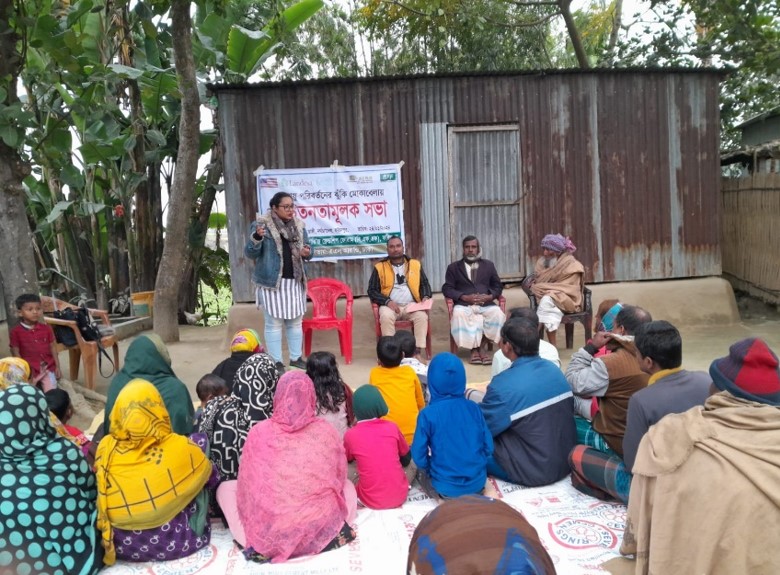
Community Awareness Meeting in Faridpur, Bangladesh
Q: What role do land rights and sustainable land-based solutions have in combatting these challenges?
In Bangladesh, very few women have their right to inherit or own land. At the same time, they are at greatest risk of being impacted by climate change. Promoting equal land rights and sustainable land management can be core solutions to address climate risk and associated challenges that women confront on a daily basis. Stronger land and inheritance rights can empower women economically and improve their decision-making abilities. With access to khas (public) land, women can adopt sustainable agriculture practices and boost productivity through the practice of climate resilient agriculture.
Q: Explain the work of this project and the approach of working with coalitions, capacity building, and advocacy. What makes this approach so meaningful or impactful?
At the beginning of the project, a national Country Coalition was formed. The project is currently working to leverage the national climate action coalition, building capacities of CSOs and communities, and facilitating awareness raising events to advocate for closing the gap on women’s land rights in national policies, as well as organizing events and opportunities to elevate women’s leadership in the context of climate action.
The coalition is working across local, national, and regional contexts to disseminate information, facilitate multi-way learning and sharing with peer coalitions in other countries. The coalition is also working with CSOs in Bangladesh to disseminate information at the community level through capacity building workshops and advocacy events.
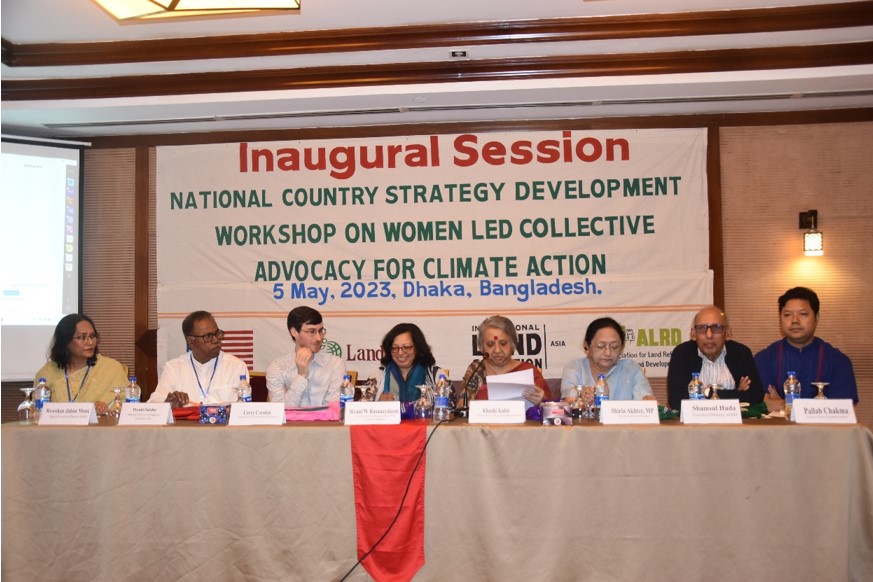
National Country Strategy Development Workshop. Dhaka, Bangladesh, 5-6 May 2023
Recently, community and youth volunteers of Satkhira and Bagerhat districts have taken preparatory measures and worked alongside local government during Cyclone Remal, playing a vital role to minimize the risk of lives in their communities.
Q: How have coalition building and collaboration helped to advance your work?
The Bangladesh coalition has been focusing on inclusive decision-making bodies/authorities responsible for addressing DRR (Disaster Risk Reduction) and CCA (Climate Change Adaptation) issues since the inception of the project. Based on the national coalition strategy, the Bangladesh country coalition advocated for and succeeded in the inclusion of Indigenous community leader (from the Munda community in Satkhira District) in the UDMC local government institution. The Bangladesh country coalition is also assisting Union Councils to hold regular meetings and discuss the DRR and climate change adaptation issues in the piloting areas. Finally, the coalition is currently assisting to organize and facilitate an advocacy event promoting women land rights and women’s leadership in the context of the climatic situation.

Advocacy meeting with UDMC in Satkhira, Bangladesh
Q: A cornerstone of this project is to advance women’s leadership in climate action and to strengthen and sustain women-led civil society organizations. Can you reflect on that approach and why it is important to center women’s voices in collective action on climate change?
Women are among the most vulnerable during disasters and other extreme weather events, in part because women have far less control or ownership over assets compared to men, due to patriarchal practices in the society. Landless women face huge barriers to access khas (public) land for their living and economic activity. While 72% of rural women are involved in agricultural production in Bangladesh, they are still not recognized as farmers, and are instead considered as “agricultural laborers.” This restricts their access to government services that are available to farmers.
Women farmers have the potential to greatly contribute to efforts to respond to and mitigate climate change. It is necessary to develop awareness and training materials focused on women farmers to maximize their learning of carbon emission reduction strategies using organic fertilizer and traditional agricultural methods. Women farmers can be key actors for reducing carbon emissions in the agricultural sector. They can also contribute by taking preparation before any disastrous event. We think it is important to center women’s voices in collective action on climate change and strengthen women-led civil society organizations with this purpose.
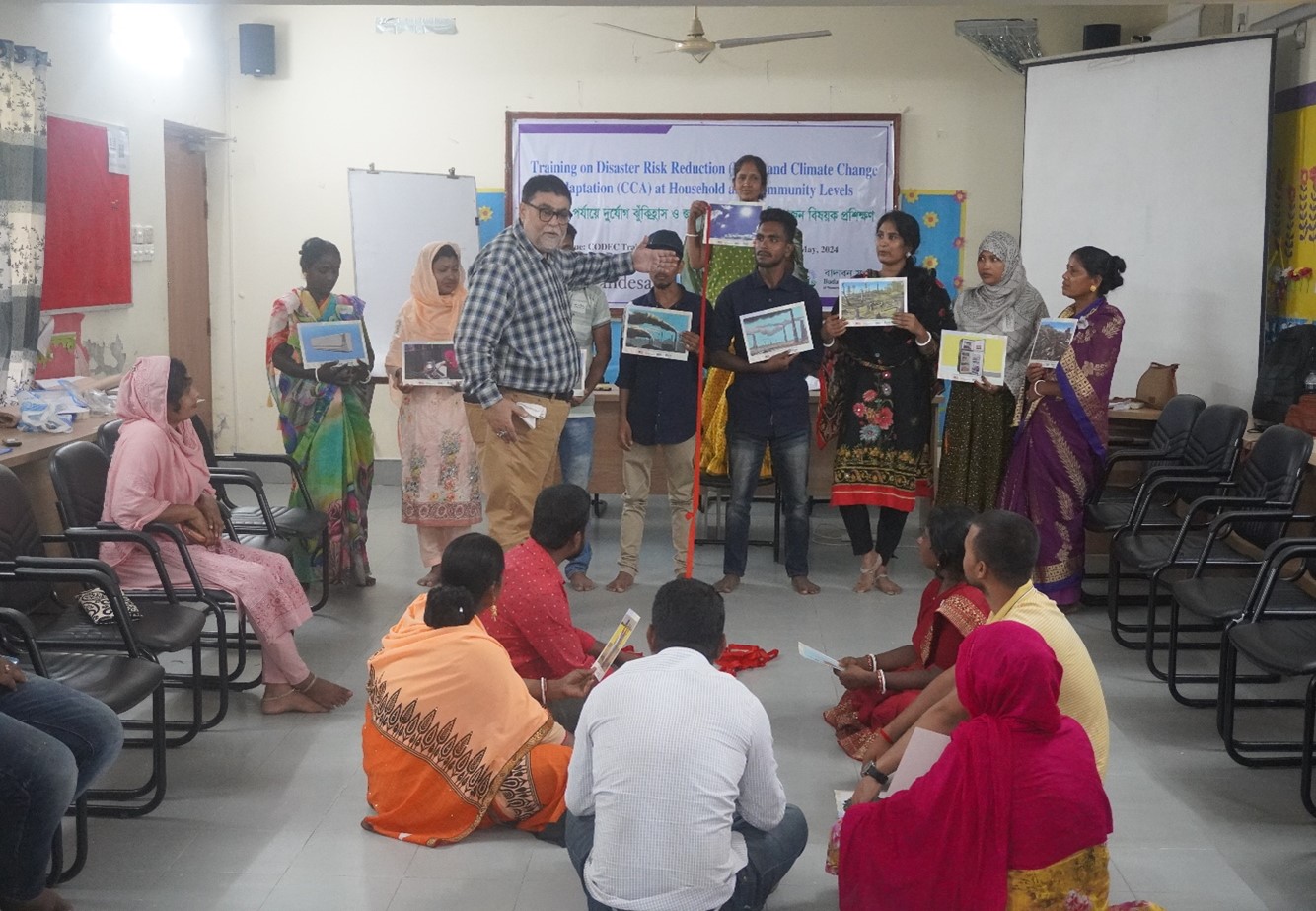
Capacity Building Training on DRR and CCA at community level, Bagerhat, Bangladesh
Q: What is one piece of advice you would offer to other organizations interested in working at the intersection of climate, gender, and land rights?
Women’s land rights are rarely a focal point of climate change action initiatives. So, organizations, networks, and platforms must place women’s land rights at the center of their climate change initiatives.
This is one of three Q&A's with the national coalition leads from our Women-led Collective Advocacy for Climate Action project in Bangladesh, Nepal, and Maldives. Read the other two blogs:

Prem Prakash Nepali, Program Manager of National Land Rights Forum. NLRF is dedicated to a self-reliant and dignified life for landless individuals in Nepal by advancing the organized power and ideological capacity of land-deprived communities to claim land rights at all levels. NLRF uses policy advocacy, issue-based campaigns, and facilitation of enabling policies to increase access to and ownership over land.
Read Prem's Q&A
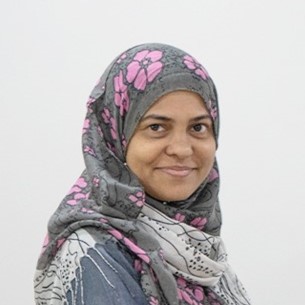
Muna Mohamed, Executive Director of Land Sea Maldives. LSM is committed to promoting good governance and community-based natural resource management, advocating for rights related to food security, healthy living, and economic empowerment in Maldives. Emphasizing sustainable and equitable resource use, LSM works with local communities, governmental bodies, and international partners on projects that promote livelihood opportunities, enhance environmental conservation, and build community resilience.
Read Muna's Q&A