




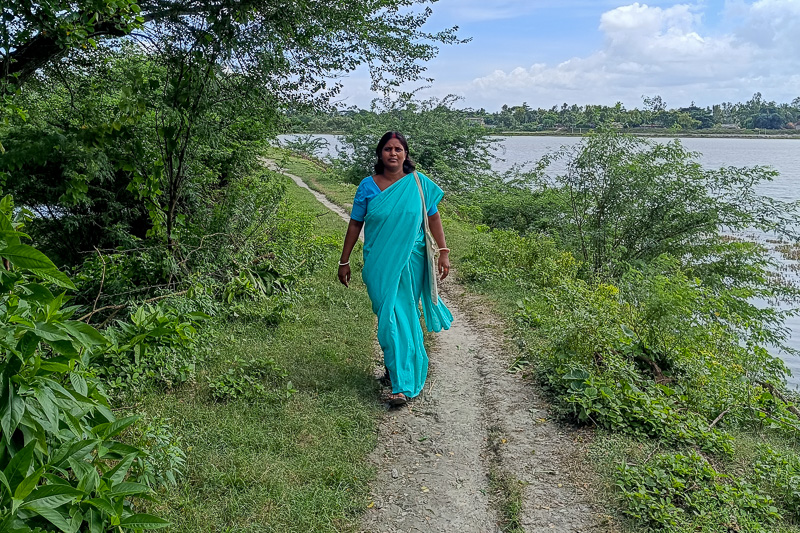
For communities in the Sundarbans, the risk of flooding, storm surges and other extreme weather events are an ever-present danger.
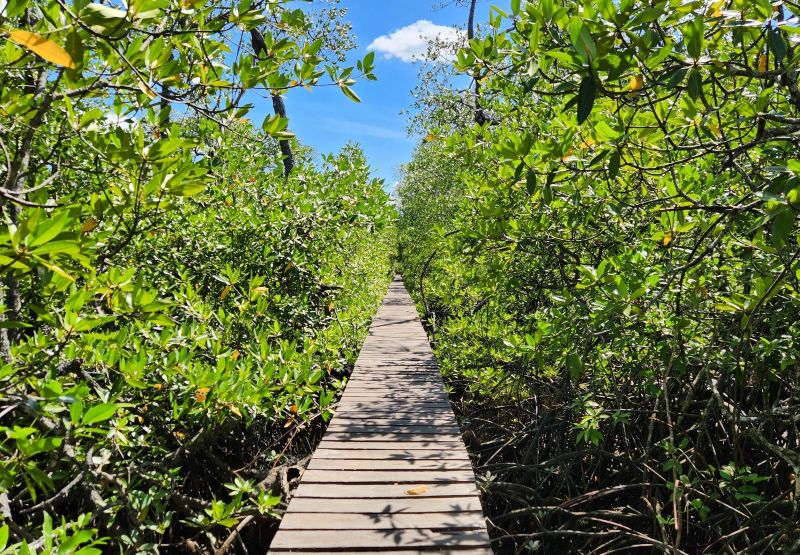
Sitting astride West Bengal, India, and Bangladesh, the Sundarbans are the world’s largest mangrove forest, formed by the confluence of three rivers that comprise the Ganges Delta.
Supriya Mondal understands the threat from extreme weather from firsthand experience.
“When the river floods, we suffer the most, because we live so close to the river,” said Supriya, 34, who lives with her husband in Kochukhali village in the Indian Sundarbans.
In 2009, deadly Cyclone Aila devastated their thatched home. For more than a month, they took shelter under a plastic sheet by the roadside. Supriya volunteered to support relief teams, distributing aid and assisting the elderly and other vulnerable people. This experience strengthened her determination and helped develop leadership traits within her. It became an important first step on her journey to becoming a trusted change agent and conservation champion in her community.
The year after the storm, Supriya joined a Self-Help Group (SHG), later becoming its secretary. It was through the SHG that she learned about a conservation and livelihoods program facilitated by Landesa and Gram Nayojan Kendra (GNK). Landesa and GNK are raising awareness of the importance of conserving mangroves and adopting non-forest livelihoods, like farming and aquaculture, to protect the delicate ecosystem of the Sundarbans.
In 2024, Supriya was trained as a field facilitator, tasked with educating other SHG members on the importance of mangroves conservation, climate change, and alternate livelihoods. She also learned about the importance of women’s land rights, including the importance of having updated land records and of women having land in their own name.
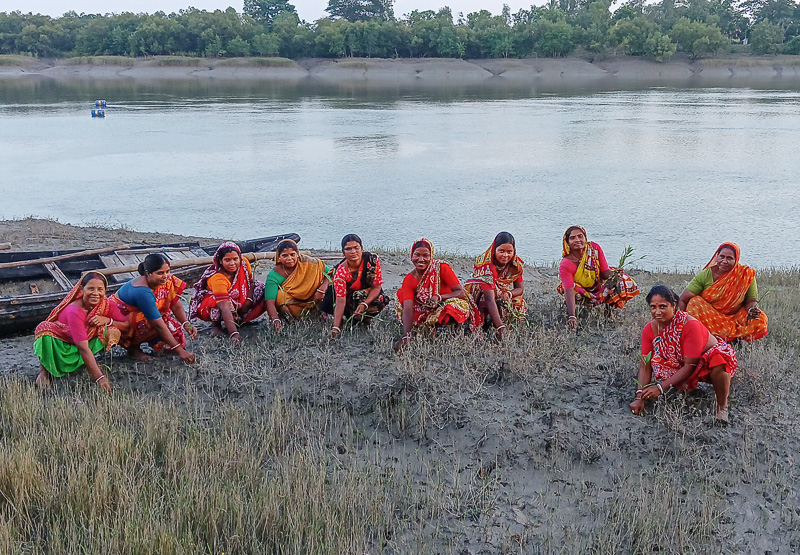
Supriya helping Indigenous women in her community plant mangroves.
She was then selected to participate in a climate-smart livelihoods training, organized by Landesa, which enriched her understanding on improving farming practice and inland fisheries.
“Not only did I learn new processes, but I was truly surprised to know that by choosing such livelihood practices, I could both start nature-based solution to livelihoods, use natural resources and contribute to mitigating climate change,” she shared.
Supriya applied the new methods to her existing fish ponds, and quickly noticed improvements in fish growth. She said she expects her annual income to increase by around 20,000 Indian Rupees (about $220 USD) as a result.
In the process, she gained new perspectives connecting mangroves conservation, alternative livelihoods and climate change mitigation.
“Earlier I didn’t know how our Sundarbans is degraded due to overexploitation of its resources, causing imbalance in its ecosystem,” she said. “These days I feel comfortable to relate climate change impacts in our lives and how the frequency of hazards are increasing over the years. I used to think floods caused by breach of river embankments broke. But now I realise that the embankments get weaker because mangroves are depleting.”
Now, Supriya embraces her role as a guardian of the Sundarbans. She speaks up whenever she sees anyone harming the mangrove plants, even unknowingly, to correct their behavior, while also promoting sustainable, non–forest and climate-smart livelihood options within her community.
For example, Supriya takes initiatives to generate awareness among the fisherfolk to stop the practice of throwing discarded live marine species from net towards shore.
She takes a minute to explain, “This practice causes irreversible damage to Sundarbans biodiversity, please reconsider your action to a changed behaviour by releasing them back into the river. I’m happy to see this practice is now reversing to contribute to biodiversity protection.”
However, raising awareness in remote villages, is not without challenges. Sometimes, villagers refuse to comply with her suggested actions and dismiss her. To overcome skepticism, she tries different methods to encourage behavior change, like using relatable stories. She also employs a flipbook, a communication aid developed by Landesa, to make discussion sessions interesting and engaging.

Supriya facilitating a discussion on climate change with the help of a flipbook.
For Supriya, each sensitization meeting with woman SHG members offers a new opportunity to improve her facilitation methods. During a recent sensitization meeting within an Indigenous community, she joined the local women in planting young mangroves saplings along the riverbank. Inspired by her training, the women collected those young plants from the forest while fishing in the river. She would explain to the women, “Mangroves absorb far more carbon from air than other trees, which helps in mitigating climate change adversities, and they act as a natural shield during floods.”
Today, Supriya says she has earned the respect and love from her community, and is seen as a trusted face and a powerful change agent.
“I enjoy this work,” she said. “At the end of each sensitization meeting, I ask all women to join hands to make a circle, and they take a pledge by a shared promise to protect the mother Sundarbans.”
Related resources
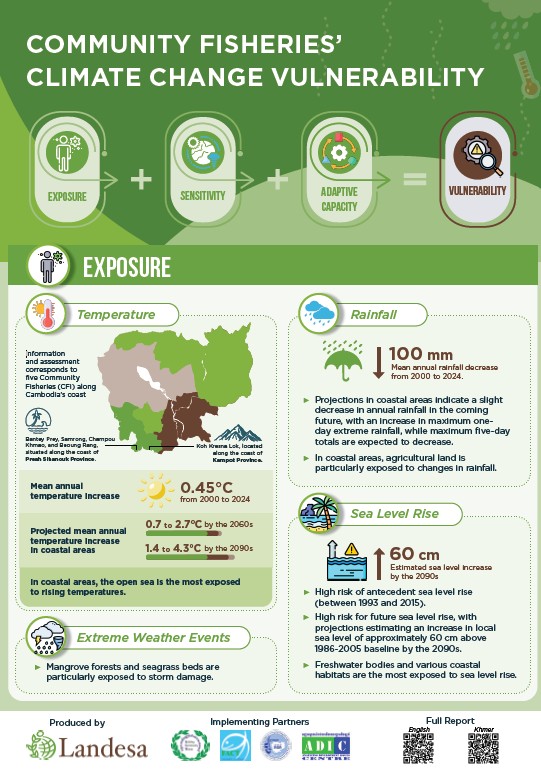
Community Fisheries’ Climate Change Vulnerability Infographic (English and Khmer versions)
These infographics reflect Landesa’s findings from the Community Fisheries Climate Change Vulnerability Assessment report and were developed as primary tools for raising awareness through educational events conducted with Community Fishery members in Cambodia.
Infographics
Mangrove Ecosystem Service Valuation in Indonesia’s New Capital City – IKN
This brief highlights how recognizing and integrating the ecosystem services of mangroves into planning decisions—complemented by conservation efforts and sustainable resource use through strengthened tenure rights—is essential to promoting sustainable land use in Indonesia’s intended new capital city.
Landesa Reports, Research
Integrating Mangrove Ecosystem Valuation, Land Certification, and Gender Inclusion in Nusantara Capital City
Landesa’s new study demonstrates how Indonesia’s intended new capital city can showcase integrated and inclusive tenure security and coastal management that balance urban development with mangrove ecosystem conservation. The study reveals the feasibility of implementing Payment for Ecosystem Services and proposes integrating ecosystem service economics with the land certification framework in the country, pioneering gender-responsive ecosystem service rights certification.
Research, Landesa Reports
