




For more than four decades, Momtaz Begum has lived at the mercy of the rivers that surround her small village of Rakhamari in southern Bangladesh. Each year, the Dhangmari and Pashur Rivers creep closer. Each cyclone and flood threatens to erase what she and her family have built.
Like many families in coastal Bangladesh, Momtaz’s income depends on the delicate balance of land and water—the same rivers that sustain their fishing and farming also threaten to wash their livelihoods away. “On the day of Eid festival in 2012, my house collapsed into sudden river erosion, leaving no time to save any of our belongings,” Momtaz recounts. A few years later, she purchased a plot of land from a neighbor and worked hard to pay it off within a year.
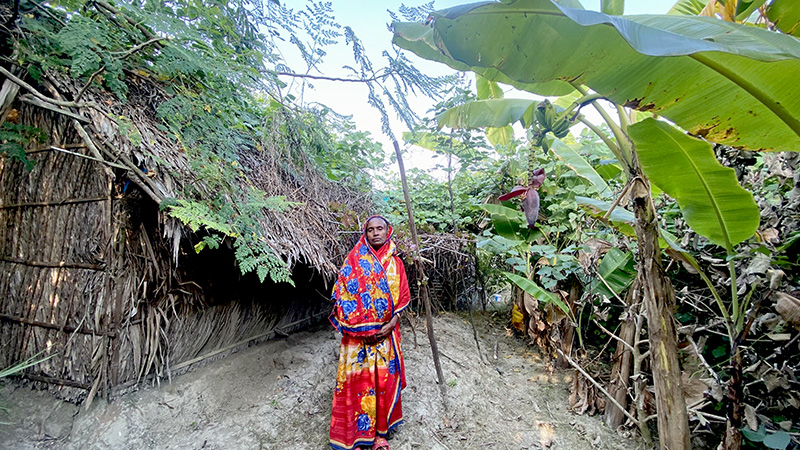
“Since I got married, our home has been lost or severely damaged 18 times from river erosion, cyclones, and floods,” Momtaz says. “Whatever we did to renovate or erect a fresh thatched dwelling structure, the unkind nature again shattered our hopes. The eroding Dangmari River pushed us closer to the Pashur River every time to nullify the efforts we spent to rebuild a structure by using the leftover ruins. This is our nineteenth attempt.”
Rakhamari Village sits along one of the most erosion-prone stretches near the Sundarbans mangrove forest. Rising seas, stronger storms, and unpredictable tides—fueled by climate change—regularly destroy fragile homes made from bamboo and thatch. But through her involvement with the sub-Village Conservation Forum (sub-VCF) supported by Shushilan and Landesa, Momtaz has transformed her despair into determination.
In one of the sub-VCF meetings, Momtaz learned how strong mangrove roots can make homes more climate-resilient—their deep, interwoven systems hold the soil and buffer waves. Inspired, she began to act. “The Pashur River flows in front of my plot and the Dhangmari River behind my home. I have planted about 500 trees around my home, mostly mangrove species like Sundari, Pashur, and Golpata,” she explains proudly. “I believe planted trees, particularly mangroves, will help protect my land from coastal flooding and erosion.”
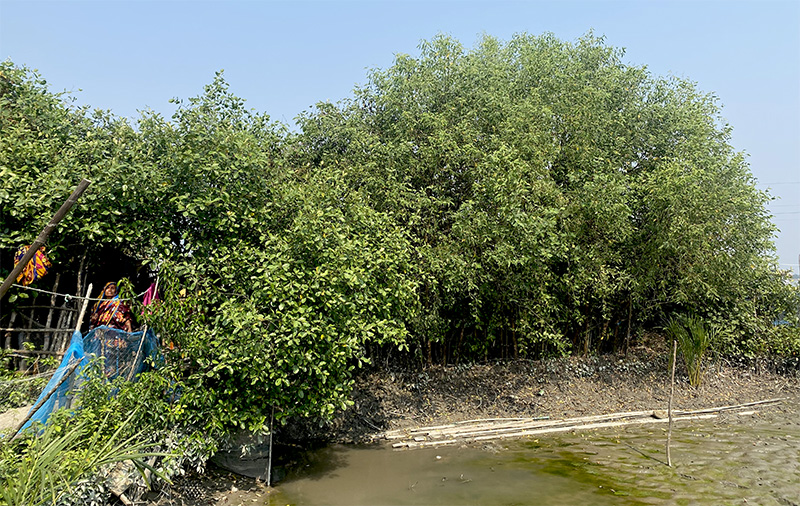
Momtaz and her husband, who earn a modest living from fishing and small-scale farming, have also started adapting their home to withstand future storms. After Cyclone Remal destroyed their house in 2024, they rebuilt on higher ground—raising their homestead by nearly five feet using the mangroves and soil from a newly dug pond that also supports fish and crab farming. “We learned to make our home climate-resilient,” she says. “Next time, we hope the river will not reach us.”
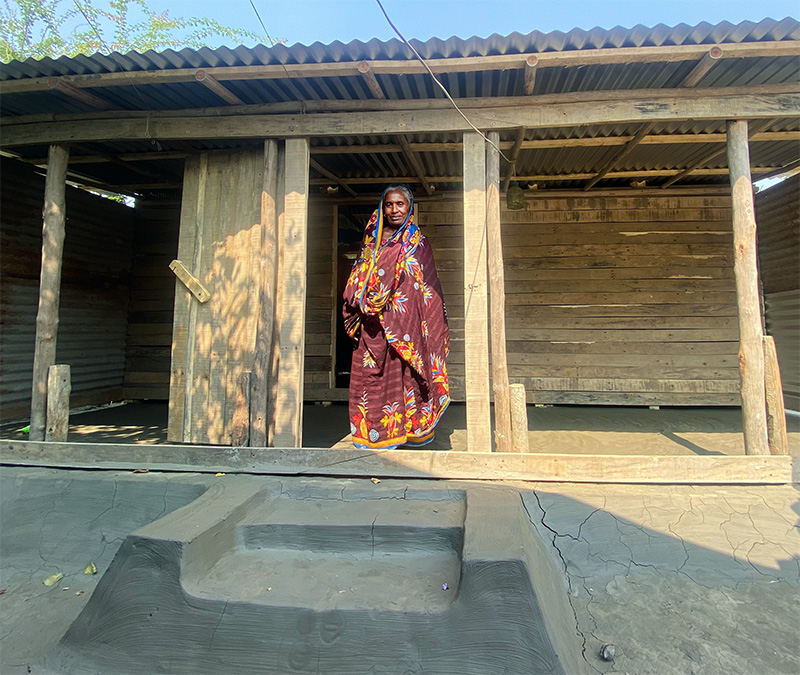
For Momtaz, protecting her land and restoring nature are deeply personal acts of survival and resistance. In the wake of increasing frequency of climate events, she said, “I believe planting mangroves along river slopes around habitation will hold the soil firmly to support our community’s survival.”
Related resources
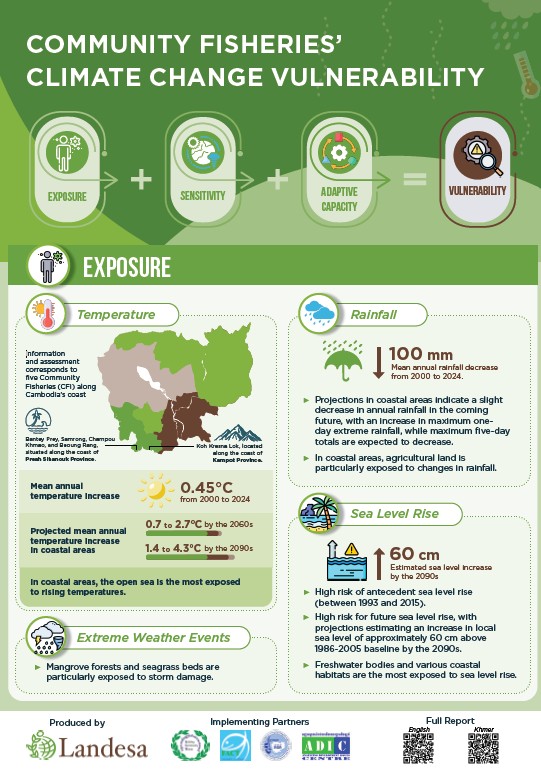
Community Fisheries’ Climate Change Vulnerability Infographic (English and Khmer versions)
These infographics reflect Landesa’s findings from the Community Fisheries Climate Change Vulnerability Assessment report and were developed as primary tools for raising awareness through educational events conducted with Community Fishery members in Cambodia.
Infographics
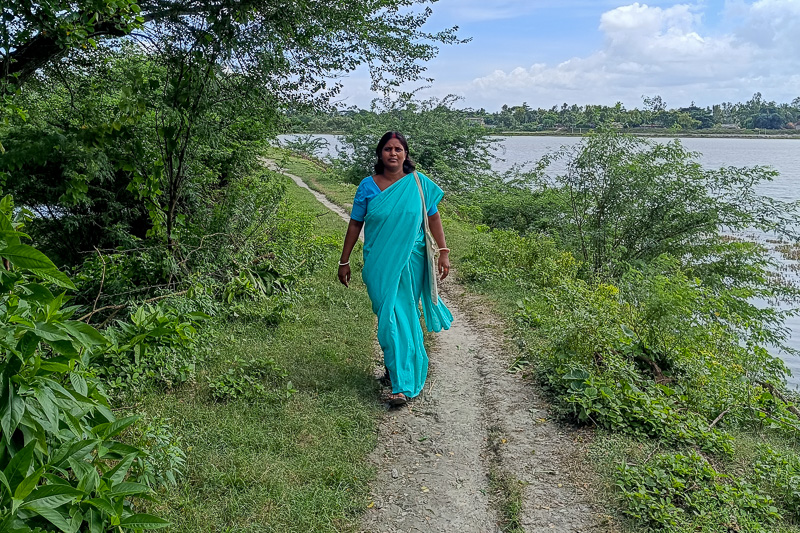
From Struggle to Stewardship: A Woman Leading Change in the Sundarbans
After Cyclone Aila destroyed her home, Supriya Mondal lost nearly everything. But the disaster also set her on an unexpected path, one that would turn her into a trusted community leader helping protect the Sundarbans through climate-smart livelihoods and mangrove conservation.
Success Stories
Mangrove Ecosystem Service Valuation in Indonesia’s New Capital City – IKN
This brief highlights how recognizing and integrating the ecosystem services of mangroves into planning decisions—complemented by conservation efforts and sustainable resource use through strengthened tenure rights—is essential to promoting sustainable land use in Indonesia’s intended new capital city.
Landesa Reports, Research
