




By Corey Creedon, Sustainable Livelihoods and Land Use Specialist
A Double Burden: Climate Vulnerability and Gender Inequality in South Asia
South Asia is one of the most vulnerable regions to climate change and has one of the largest gender gaps. Climate and land inequities pervade Bangladesh, Nepal, and Maldives. In Bangladesh, women suffer disproportionately from climate-induced disasters, including excessive heat, flooding, frequent cyclones, and tidal surges. These climate risks intersect with insecure livelihoods and land rights, compounding issues of food insecurity, displacement, and conflict. In Nepal, climate-exacerbated hazards such as flooding from glacial lake outbursts amplify existing land issues, particularly for landless populations. Impacts are especially felt by women, who hold land rights in fewer than 20% of households. In Maldives, warming temperatures and rising humidity are reaching life-threatening levels, while sea level rise presents a significant threat to those most marginalized.
From Vulnerability to Joint Action
To counter these threats, Landesa’s Women-led Collective Advocacy for Climate Action project (2023 – 2025) aimed to strengthen and sustain the capacity of networked, women-driven civil society organizations in Bangladesh, Nepal, and Maldives to advance local climate resilience, effective advocacy at all levels of governance, and gender-equitable land rights.
Importantly, the project advanced a conceptual model which saw women’s land rights (WLR) and gender-equitable participation and leadership in decision-making foundational means to enhance climate action and sustain gender-inclusive peace and security.
Project partners included Landesa, which provided overall project coordination and technical support, the International Land Coalition (ILC), which provided regional coordination and technical support, and the Association for Land Reform and Development (ALRD), the National Land Rights Forum–Nepal (NLRF), and Land Sea Maldives (LSM), which grounded and drove country-level efforts in Bangladesh, Nepal, and Maldives, respectively.
By uniting under a shared purpose, the project leveraged the power of collective action as an essential element for effectively addressing climate change challenges and fostering grassroots-based solutions while engaging a total of 24 civil society coalition members across the three project countries.
Building Capacity for a Resilient and Equitable Future
Jointly, the initiative succeeded in training 617 people for enhanced capacity to advance gender equality and women’s empowerment, 2,136 people for enhanced capacity to adapt to the effects of climate change, and 1,260 people for enhanced capacity in disaster preparedness.
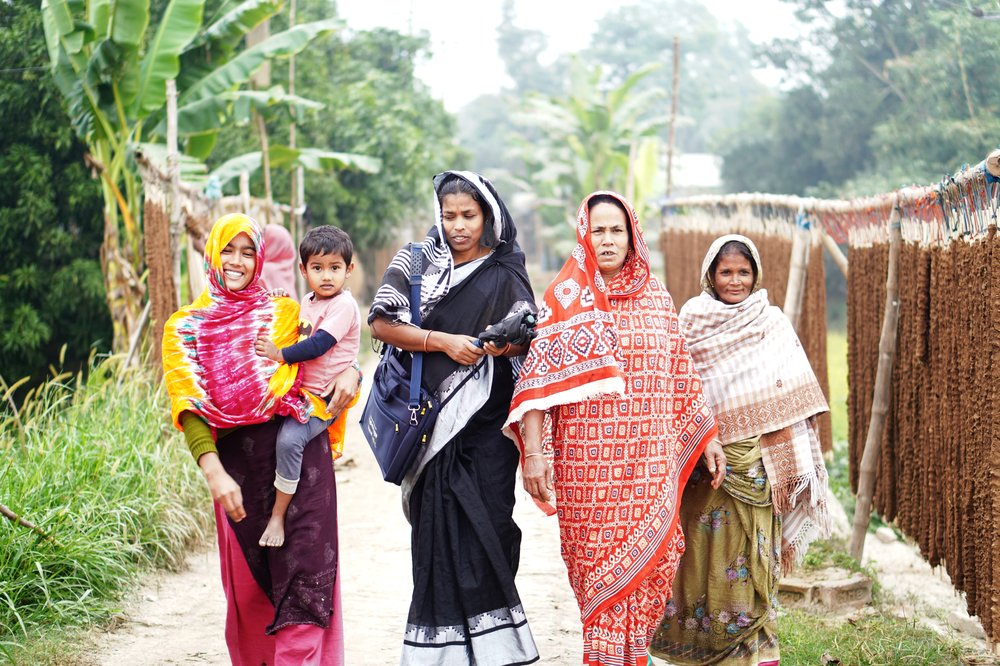
In Bangladesh, these capacity building efforts featured trainings on local-level disaster risk management, climate-smart agriculture, land-based solutions, sustainable land management, and WLR, while often involving local government counterparts to strengthen pathways for local advocacy efforts.
In Nepal, trainings focused on WLR, land tenure security, climate change, disaster risk reduction, land-based solutions, sustainable land use, and local-level planning, including participatory land use planning.
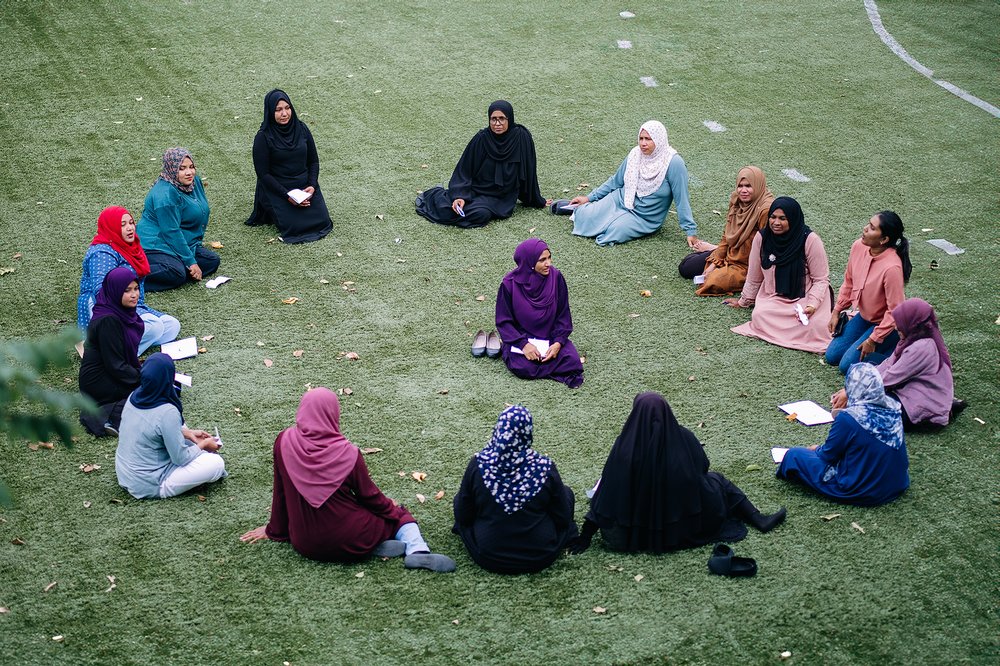
In Maldives, training focused on climate-smart agriculture, approaches to assessing environmental challenges and opportunities, youth engagement, women’s entrepreneurship, building strategies for climate action, shoreline restoration, and sustainable land management. These efforts directly supported grassroots organizations and community members, further equipping them with tools to navigate the impacts of climate change, build more resilient lives, and work toward a more equitable society.
Scaled Advocacy: Elevating Voices and Achieving Action
Perhaps one of the project’s most powerful impacts came through its targeted advocacy efforts, which sought to elevate the voices of women and traditionally marginalized communities in collective advocacy actions. Coalitions organized 52 activities to strengthen the civic participation of women and engaged 1,422 people in state and local advocacy activities.
In Bangladesh, local advocacy successfully strengthened gender-inclusive and equitable disaster management planning, policy, and governance structures in coordination with local government committees and community volunteers. For example, in Satkhira, government officials committed to establishing a woman and disability-friendly cyclone shelter in Datinakhali Village for Munda Indigenous Peoples and marginalized groups who are currently living along the embankments near the Sundarbans mangrove forest – areas which are especially vulnerable to the climate-exacerbated impacts of storm surge and coastal inundation.
At a national level, ALRD and the Bangladesh coalition also convened inclusive dialogue platforms with key government ministries, advocating for the core themes of WLR, gender equity, and equitable climate action to be included in updates to Nationally Determined Contributions (NDC). As a result, Bangladesh’s updated NDC features a robust section on priority actions related to Gender, Equality, Disability, and Social Inclusion (GEDSI) and proposes actions to support land tenure security and financial access to vulnerable groups. These actions are expected to contribute to outcomes associated with increased food security, resilience, carbon sequestration, and empowerment of women and youth.
In Nepal, NLRF and the coalition hosted policy dialogues with local government officials and communities, emphasizing the importance of gender-equitable, sustainable land management plans, calling for more effective implementation of a WLR agenda, and organizing participatory and inclusive community mapping sessions. In Pancheshwar Rural Municipality, Baitadi District, in the Far-Western Region of Nepal, these efforts ultimately led to the successful development of a local land use plan that responsively integrated the perspectives of women, the landless, and other traditionally marginalized groups.
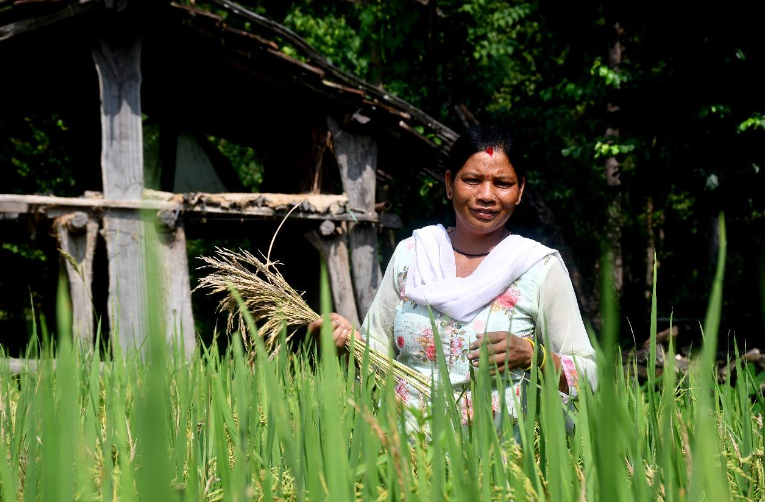
At a higher level, in partnership with other civil society organizations, NLRF developed a study on the intersection between land and climate change in Nepal. Subsequently, the Nepal coalition convened landmark dialogues between government ministries and civil society – which provided platforms for women, Dalit, and Indigenous Peoples to discuss this intersection and to advocate for gender-equitable and inclusive climate action. This effort led to successful national policy reform, which featured the significant inclusion of land tenure and stronger gender equity considerations into Nepal’s updated NDC.
Landesa supported the NDC policy wins in Bangladesh and Nepal by providing an analysis of existing policies and key recommendations for integrating women’s land rights and gender equity with country coalitions, along with advocacy planning guidance to help inform their national-level efforts.
In Maldives, LSM and the coalition engaged local government councils and committees, including in Thinadhoo Island (Gaafu Dhaalu Atoll), Noonu Atoll, and Fonadhoo Island (Laamu Atoll), on strengthening climate-smart agriculture and sustainable land management plans.
Project partners also brought their messages to regional and global stages, including the United Nations Framework Convention on Climate Change (UNFCCC) Conference of the Parties (COP28 and COP29), connecting with others and ensuring that the challenges and transformative solutions underway in the initiative could be shared and inspire broader action on gender equity, women’s land rights, and climate action.
Leading with Equity and Land Rights: A Way Forward for Climate Action
While this project has drawn to a close, the effort to advance the interconnected causes of land rights, gender equity and social inclusion, and climate action across Bangladesh, Nepal and Maldives will continue. Project partners continue to leverage their coalition structures and strategies to advance gender-equitable and inclusive land rights and climate action. Through connections established during this initiative, NLRF has recently joined the Stand For Her Land Campaign, thereby offering a further platform for sharing experiences and perspectives around land rights and engaging in further movement-building and advocacy to drive change.
This project is a testament to the fact that when women are at the center of climate action, the results are more equitable, more effective, and more sustainable. By forging strong coalitions, building local capacity, and advocating for policy change, women-led civil society organizations and communities in South Asia are not just adapting to a changing climate, they are leading the charge for a more just and resilient future.
Related blogs
Advancing the Integration of Land Tenure into Nationally Determined Contributions: The Case of Cambodia
Our work has emphasized the importance of explicitly recognizing land rights in the NDCs as effective tools for natural resource management, particularly in forest and coastal ecosystems.
November 06, 2025
What can the fortress conservation debate teach us about the importance of women’s land rights in protecting mangrove ecosystems?
Landesa’s new study shows how Indonesia’s new capital can balance urban growth with mangrove conservation by integrating ecosystem service economics into land certification to strengthen gender-responsive land rights.
October 22, 2025
Strides for Land, Gender, and Climate through Nepal Policy Reform
Nepal’s updated climate plan highlights the power of land rights—especially for women—as a foundation for equitable climate action.
July 15, 2025
