




By Sanjoy Patnaik
Most of the world’s poor share two traits: they rely on agriculture to survive, but they don’t own or have legal control over the land they till.
Across India, there are tens of millions of families who share these traits. They are farmers with no legal claim to the land they have occupied for many years, or they are tenant farmers, or day laborers.
They have been trapped in poverty for generations.
And they had no reason to believe that their children or grandchildren could know a different – more stable or prosperous– life.
Until, Landesa, a global nonprofit working in partnership with a variety of state governments and the Indian national government, designed and implemented new programs that provide secure land ownership opportunities for the poor.
How much land does it take to provide the poor with the incentive and opportunity to climb out of poverty? Less than you would think.
Landesa’s research and fieldwork is proving that a plot of land as small as a tennis court can be an important first step to lifting a family out of extreme poverty.
We call them micro-plots. And their small size belies their large impact.
We’ve found that on these one-tenth of an acre plots, families can produce most of the vegetables and fruits they need and sell excess produce to supplement the family’s other earnings.
Families report that the food they grow on their new micro-plots boost family nutrition, the excess sold at market helps provide added income, and having their own home gives farm hands, who would otherwise live on their employer’s property, bargaining leverage to negotiate a fair wage.
And the benefits touch the next generation as well. Families report that secure title to a small plot of land is often the missing ticket families need to send their children to school, for a variety of reasons that may not be obvious. Sometimes land allows families to stop or reduce migrating and grow roots in a community. Other times a land title provides families with the proof of residency they need to enroll their child in school or obtain the tuition subsidy that makes school affordable. And often legal control over land is what allows families to start investing in their land to improve their income and their harvests and that is what pays school fees and buys school uniforms.
And families tell us that being a landowner is what finally allows them to speak at community meetings and participate in other community decisions and activities.
Watch this one-minute-long video to see images of these proud new landowners working their land.
And because the plots are small, our government partners say they can finally afford to address the needs of their poorest citizens. Many of our government partners are using vacant land that the government already owns or buying privately-held parcels at the market rate and dividing them up into micro-plots to help dozens or sometimes hundreds of families at a time.
Here’s what the partnership between dedicated government officials across India and Landesa, has already yielded:
- 11 states across India have allocated 210,613 micro-plots to families through land purchase programs and other micro-plot programs.
- The central government included a provision for micro-plots in the country’s 11th Five Year Plan and has allocated the equivalent of $250 million toward micro-plot programs.
- This national support has spurred additional micro-plot strategies in the states of Sikkim, Bihar, Kerala, Tamil Nadu, Andhra Pradesh, and Karnataka.
These programs deserved to be celebrated, supported, expanded and replicated both within and out of India’s borders.
Sanjoy Patnaik is Odisha State Director for Landesa, in India
Related blogs

What can the fortress conservation debate teach us about the importance of women’s land rights in protecting mangrove ecosystems?
Landesa’s new study shows how Indonesia’s new capital can balance urban growth with mangrove conservation by integrating ecosystem service economics into land certification to strengthen gender-responsive land rights.
October 22, 2025
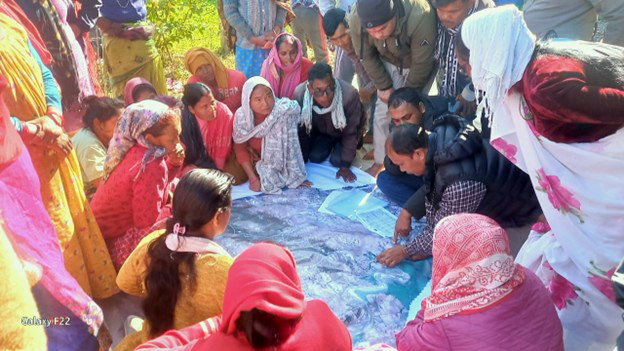
Strides for Land, Gender, and Climate through Nepal Policy Reform
Nepal’s updated climate plan highlights the power of land rights—especially for women—as a foundation for equitable climate action.
July 15, 2025
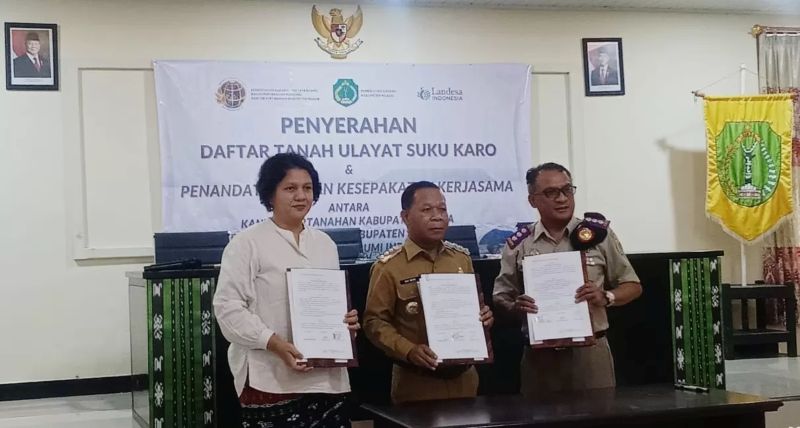
Suku Karo’s Ulayat Land Officially Registered, Becomes Indonesia’s First Participatory Land Administration Process
BAJAWA, KUPANGNEWS.COM — Marking a historic milestone, the Government of Ngada Regency, in partnership with the Ngada Land Office and Landesa Indonesia, formally recognized the Karo Indigenous Community’s customary land—the first such registration in Indonesia’s national land system through a participatory, community-led process.
June 26, 2025
