




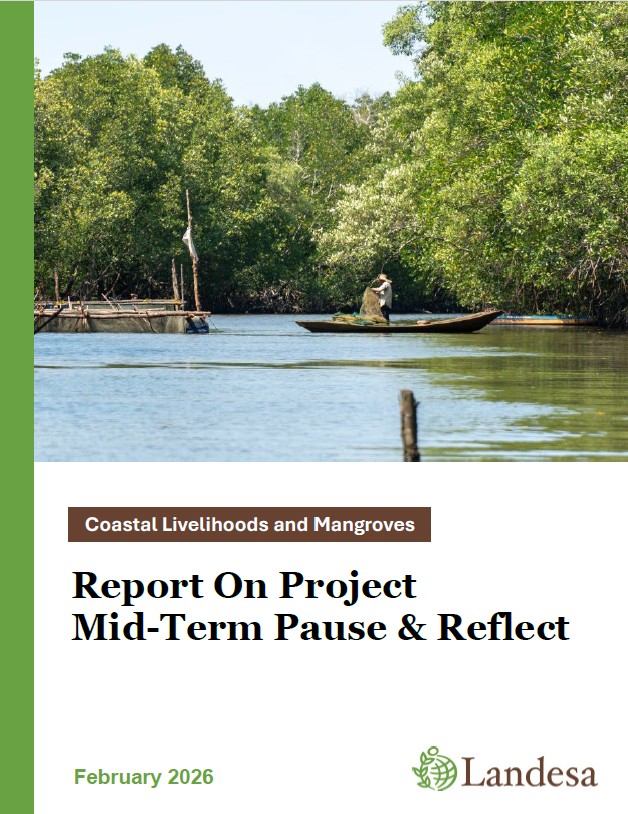
In 2022 Landesa began the ambitious 5-year Coastal Livelihoods and Mangroves Project in the Bay of Bengal and Southeast Asia to lay the foundation to strengthen law and policy over coastal tenure and resource rights of up to 73 million of the most at-risk people living in the region’s mangrove forests. In 2025 Landesa conducted a mid-term systematic “Pause and Reflect” assessment across Cambodia, Indonesia, India, and Bangladesh to understand roadblocks along change pathways and identify elements of success to build upon moving forward.
The P&R explored the following questions focused on short-term outcomes and processes in the project theory of change:
- How has the project contributed to state and community planners’ enhanced understanding of policy and program development needed?
- How has state and community planning changed as a result of project interventions?
- How has the project influenced policy, regulations, and program development?
- To what extent are these changes moving towards increased gender equality and social inclusion?
Category:
Related resources
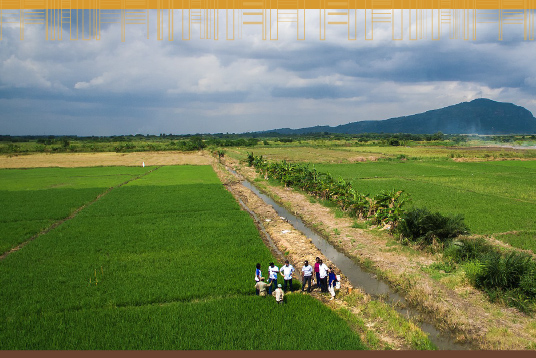
Responsible Investments in Property and Land Resource Platform
Landesa’s Responsible Investments in Property and Land (RIPL) Resource Platform translates international guidelines and best practices for responsible investments in agricultural land into user-friendly guidebooks, with one designed for businesses, one for communities, one for governments, and country-specific guidebooks for Ghana and Tanzania.
Landesa Reports
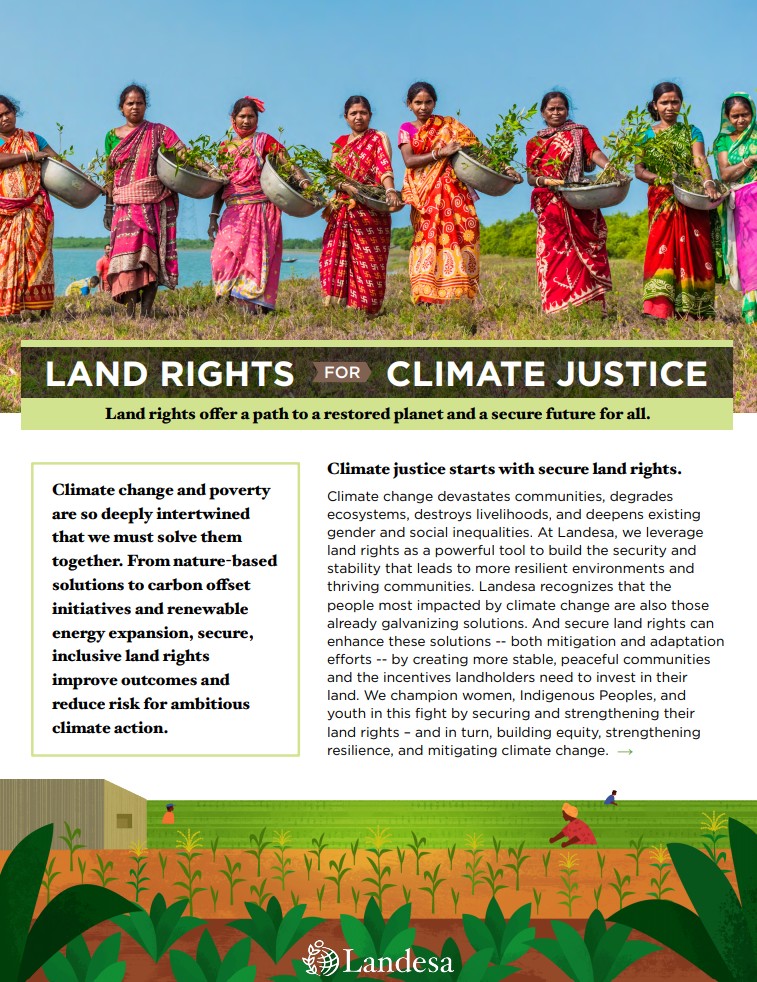
Brief: Land Rights for Climate Justice
Effective climate action depends on the rights and leadership of the people who live on and steward the land. This brief explores how secure, inclusive land rights can improve outcomes and reduce risks across mangrove conservation, carbon markets, renewable energy, and global climate policy.
Issue Briefs
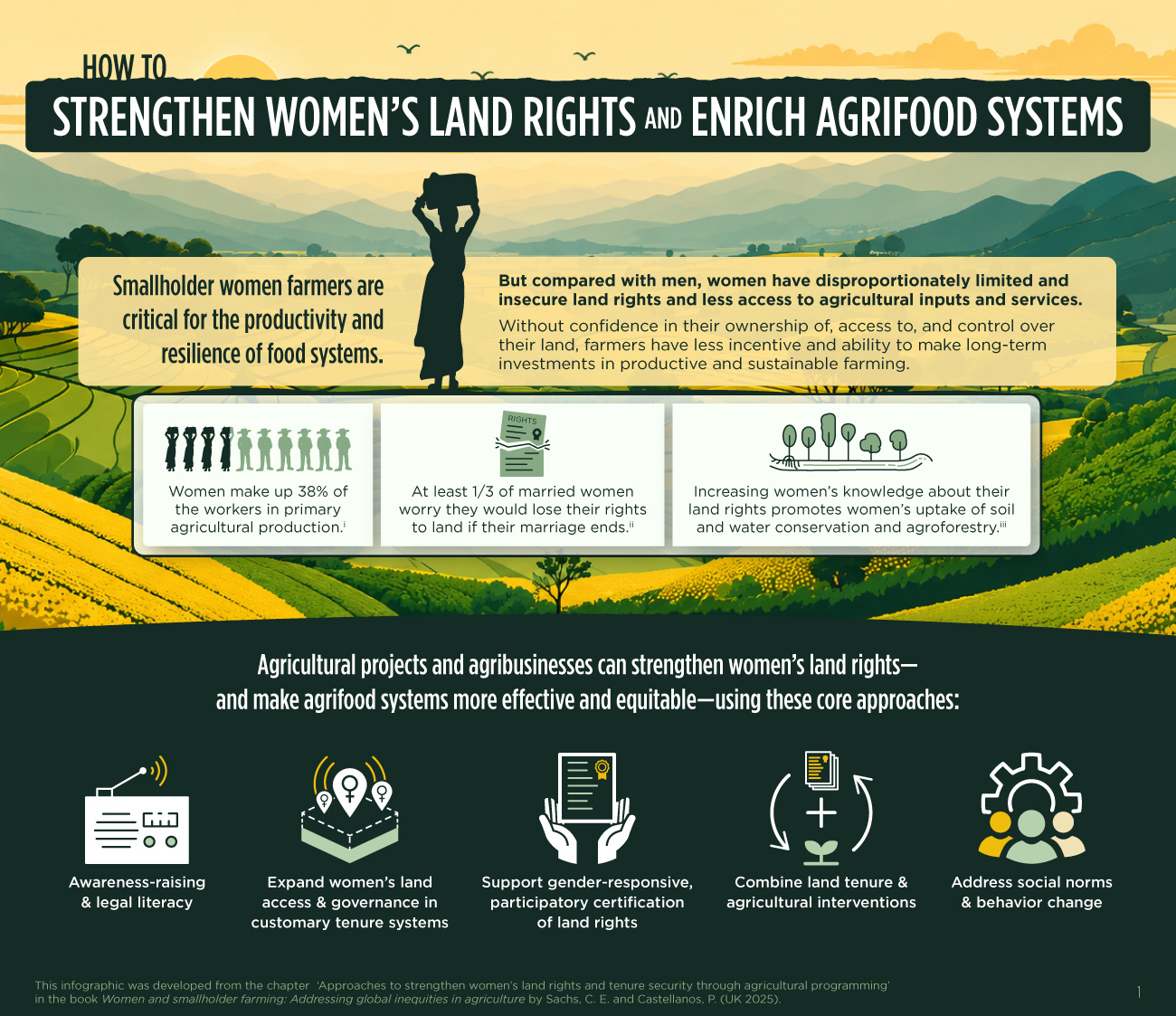
How to Strengthen Women’s Land Rights and Enrich Agrifood Systems
This infographic explores five tested approaches that agricultural projects and companies can use to strengthen women’s land rights and build more productive, equitable, and resilient food systems.
Infographics, Research
