




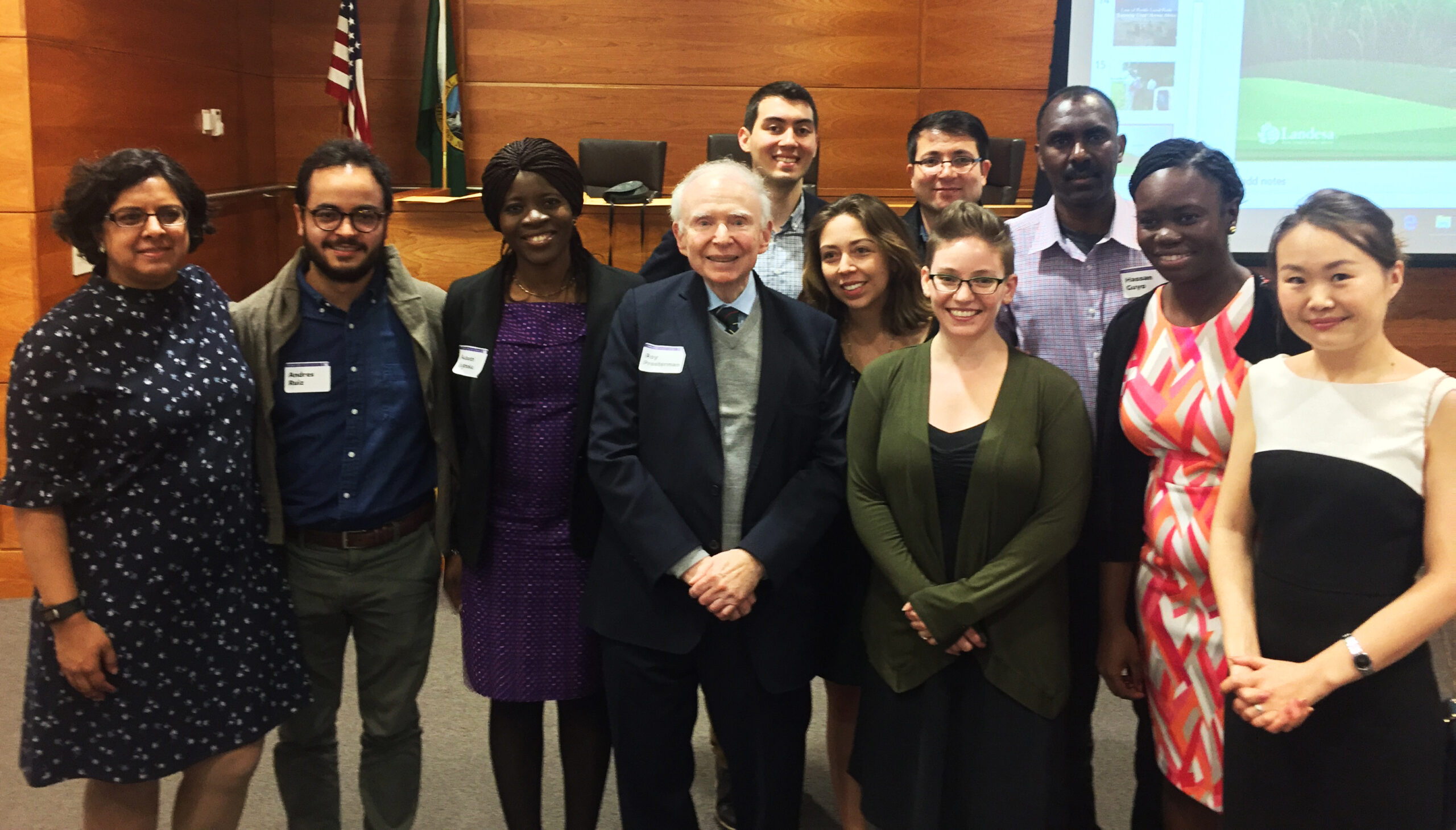
The inaugural Roy Prosterman Lecture and Sustainable International Development Alumni Celebration at the UW School of Law celebrated Roy Prosterman’s pioneering work on land reform, rural development, and foreign aid. Landesa President & CEO Chris Jochnick gave a lecture on the ten signs a land rights revolution is coming. Main takeaways include:
- Land issues are now included on global agendas, from the UN’s Sustainable Development Goals to the African Union’s Declaration on Land and more.
- In contrast to when Roy Prosterman started working on land rights 50 years ago, we now have a plethora of data, evidence-based models, new technologies, and new donors that are all committed to strengthening land rights for the world’s poorest.
- Land rights are intertwined with numerous global development efforts including women’s rights, food security, conservation, economic growth and more.
Interested in learning more about the momentum building behind a land rights revolution?
Watch the lectureRelated resources
Mangrove Ecosystem Service Valuation in Indonesia’s New Capital City – IKN
This brief highlights how recognizing and integrating the ecosystem services of mangroves into planning decisions—complemented by conservation efforts and sustainable resource use through strengthened tenure rights—is essential to promoting sustainable land use in Indonesia’s intended new capital city.
Research, Landesa Reports
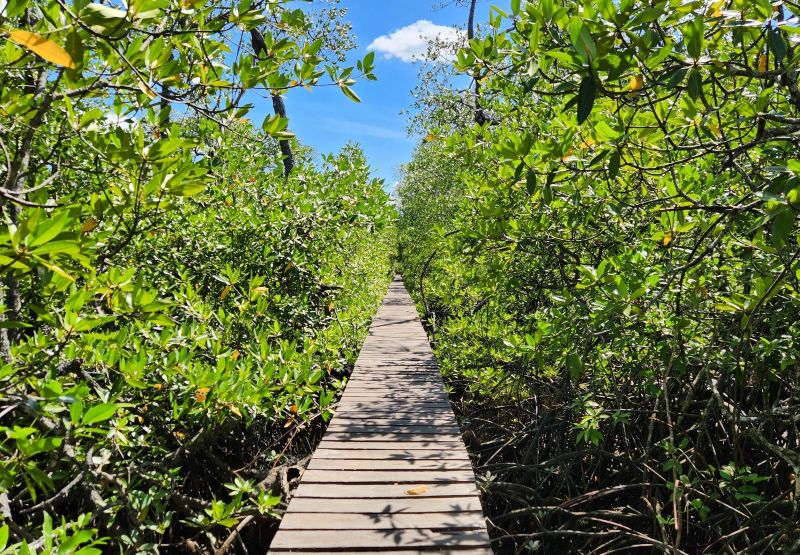
Integrating Mangrove Ecosystem Valuation, Land Certification, and Gender Inclusion in Nusantara Capital City
Landesa’s new study demonstrates how Indonesia’s intended new capital city can showcase integrated and inclusive tenure security and coastal management that balance urban development with mangrove ecosystem conservation. The study reveals the feasibility of implementing Payment for Ecosystem Services and proposes integrating ecosystem service economics with the land certification framework in the country, pioneering gender-responsive ecosystem service rights certification.
Landesa Reports, Research
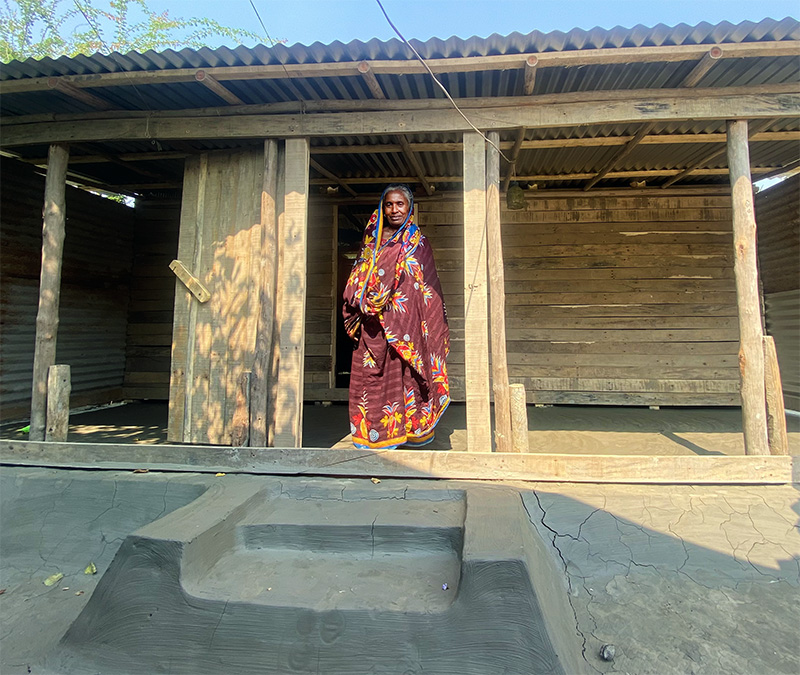
Strong Roots, Stronger Futures: Momtaz Rebuilds with Hope
Meet Momtaz Begum, a woman rebuilding hope in coastal Bangladesh by adapting her land and planting mangroves to protect her home from the rising tide of climate change.
Success Stories
