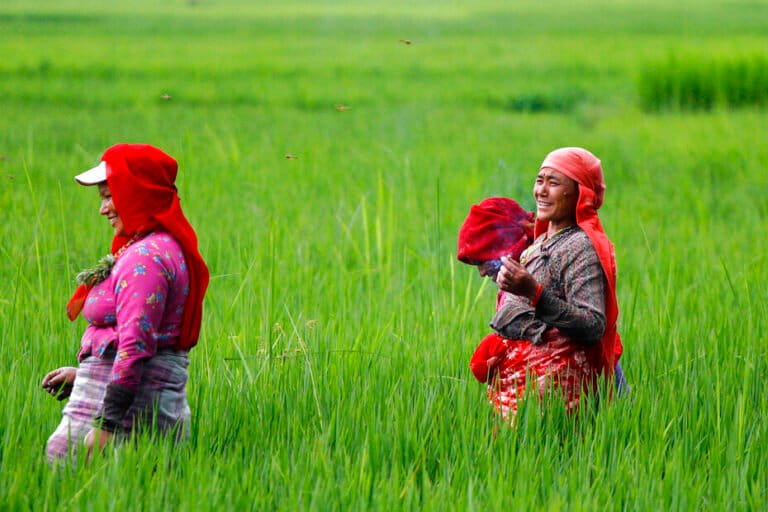
Secure and equitable land rights help communities sustain livelihoods, protect mangroves, and shape the climate that affects their lands.
Land is the foundation of livelihoods, food security, climate resilience, and cultural identity for billions of people. Who can use, manage, and make decisions about land matters for climate action. When Indigenous Peoples and local communities have secure rights to the lands and waters they depend on, they are better positioned to protect ecosystems and adapt to climate impacts. Securing women’s land rights also strengthens their ability to shape decisions about how land and resources are managed.
At the UN Climate Change Conference (UNFCCC COP31), taking place November 9-20, 2026 in Antalya, Türkiye, Landesa will work with partners to put land rights at the center of climate action. Through our Coastal Livelihoods and Mangroves Program, we’ll share new publications on how secure tenure supports mangrove conservation and restoration, alongside practical guidance on consultation and Free, Prior, and Informed Consent (FPIC). We will also build on key partnerships to increase collaboration on strengthening land and resource rights for climate action, while advocating for women’s land rights, highlighting the disproportionate impact of climate change on women and pushing for their full, equal participation in decision-making to drive stronger, gender-responsive climate solutions.
Explore the resources below to learn how secure land rights can help turn global restoration commitments into lasting results for people and planet.
Featured resources
Insight Brief: Community Fishery and Mangrove Management in Cambodia
This brief looks at how community fisheries in Cambodia manage mangroves and the coastal resources that support local livelihoods. It highlights why recognizing community tenure matters for mangrove conservation and restoration.
Consultation and Free, Prior, and Informed Consent: A Referential Practice for Carbon Projects Following a Rights-Based Approach
Landesa’s protocol lays out 10 steps for integrating consultation and FPIC throughout the life of a carbon project. It helps practitioners protect land and resource rights and address risks related to governance, benefit sharing, and gender inclusion.
Technical Guidance for Integrating Land Tenure into Nationally Determined Contributions
This resource helps governments and their partners integrate secure, gender-equitable, and socially inclusive land tenure into Nationally Determined Contributions and their implementation. It provides a suggested process, supporting resources, and sample language for incorporating land tenure into national climate commitments.
Strengthening Land Rights to Address Climate Change ‘Loss & Damage’
This article explores how secure land rights can help communities reduce climate-related losses and recover when disasters strike. It also explains why land tenure matters when communities face displacement or need to rebuild livelihoods.
Rio Conventions x WLR Advocacy Resources
Stand for Her Land’s resource collection brings together technical guides, advocacy tools, and background materials on women’s land rights (WLR) across the UN conventions on climate change, biodiversity, and desertification. It helps advocates identify opportunities to advance women’s land rights and equal participation in environmental policymaking, including through the UN climate process.
Featured events
All times are local to Antalya, Türkiye.
 Secure and equitable land rights help communities sustain livelihoods, protect mangroves, and shape the climate that affects their lands.
Land is the foundation of livelihoods, food security, climate resilience, and cultural identity for billions of people. Who can use, manage, and make decisions about land matters for climate action. When Indigenous Peoples and local communities have secure rights to the lands and waters they depend on, they are better positioned to protect ecosystems and adapt to climate impacts. Securing women’s land rights also strengthens their ability to shape decisions about how land and resources are managed.
At the UN Climate Change Conference (UNFCCC COP31), taking place November 9-20, 2026 in Antalya, Türkiye, Landesa will work with partners to put land rights at the center of climate action. Through our Coastal Livelihoods and Mangroves Program, we’ll share new publications on how secure tenure supports mangrove conservation and restoration, alongside practical guidance on consultation and Free, Prior, and Informed Consent (FPIC). We will also build on key partnerships to increase collaboration on strengthening land and resource rights for climate action, while advocating for women’s land rights, highlighting the disproportionate impact of climate change on women and pushing for their full, equal participation in decision-making to drive stronger, gender-responsive climate solutions.
Explore the resources below to learn how secure land rights can help turn global restoration commitments into lasting results for people and planet.
Featured resources
Insight Brief: Community Fishery and Mangrove Management in Cambodia
This brief looks at how community fisheries in Cambodia manage mangroves and the coastal resources that support local livelihoods. It highlights why recognizing community tenure matters for mangrove conservation and restoration.
Consultation and Free, Prior, and Informed Consent: A Referential Practice for Carbon Projects Following a Rights-Based Approach
Landesa’s protocol lays out 10 steps for integrating consultation and FPIC throughout the life of a carbon project. It helps practitioners protect land and resource rights and address risks related to governance, benefit sharing, and gender inclusion.
Technical Guidance for Integrating Land Tenure into Nationally Determined Contributions
This resource helps governments and their partners integrate secure, gender-equitable, and socially inclusive land tenure into Nationally Determined Contributions and their implementation. It provides a suggested process, supporting resources, and sample language for incorporating land tenure into national climate commitments.
Strengthening Land Rights to Address Climate Change ‘Loss & Damage’
This article explores how secure land rights can help communities reduce climate-related losses and recover when disasters strike. It also explains why land tenure matters when communities face displacement or need to rebuild livelihoods.
Rio Conventions x WLR Advocacy Resources
Stand for Her Land’s resource collection brings together technical guides, advocacy tools, and background materials on women’s land rights (WLR) across the UN conventions on climate change, biodiversity, and desertification. It helps advocates identify opportunities to advance women’s land rights and equal participation in environmental policymaking, including through the UN climate process.
Whose Land, Whose Transition? Spotlighting the Hidden Territorial Footprint of the Global Energy Transition
This report from the ILC, Land Matrix, and partners examines how renewable energy projects and critical mineral extraction overlap with Indigenous and community lands and Key Biodiversity Areas. It highlights risks to land rights and ecosystems and calls for stronger tenure protections, Free, Prior, and Informed Consent, and responsible land-use planning.
Featured events
All times are local to Antalya, Türkiye.
People-centered land governance: Securing women’s land rights for climate and economic resilience
📅 Tuesday, November 17 | 15:00–16:30
📍 Side Event Room 3 (Zerzevan)
🟢 Landesa is a co-host of this side event.
Women’s land rights are central to people-centered land governance, climate justice, economic resilience, and food security. Commemorating the International Year of the Women Farmer, this event explores law and policy solutions that advance Rio convention goals and foster women’s economic empowerment.
From Commitments to Implementation: Advancing Gender-Responsive Climate Policies and Actions
📅 Monday, November 16 | 17:00–18:00
📍 Meeting Room 19
🟢🟣 Landesa and Stand for Her Land panelists at this side event.
This side event aims to foster international and institution dialogue by providing a platform for national climate policymakers, National Gender and Climate Change Focal Points (NGCCFPs) under the UNFCCC, IN representatives, and other stakeholders to share progress, challenges, and opportunities to advancing gender equality within climate action frameworks.
Santiago Network in 2026: The Year of Scaled Delivery
📅 Tuesday, November 17 | 13:00–14:30
📍 Special Event Room 6
🟢 Landesa is a member of the Santiago Network.
The Santiago Network will share progress in delivering technical assistance to address climate-related loss and damage and discuss how to scale that support.