




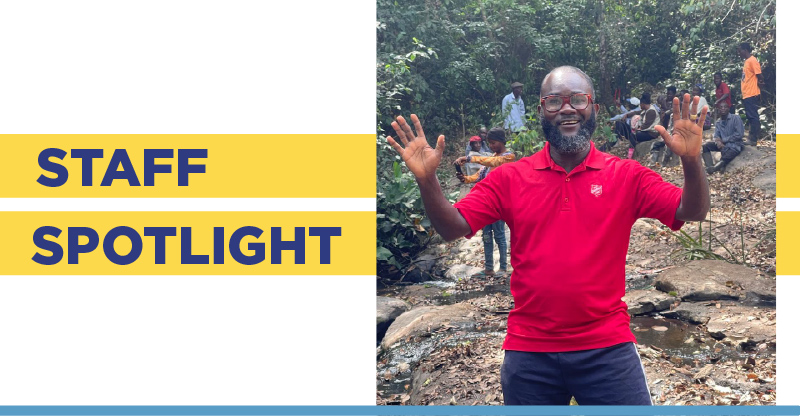
Ralph B. Quiah is a GIS and Mapping Specialist based in Liberia. Ralph started working for Landesa in 2020.
What brought you to Landesa?
My desire to join Landesa was due to my commitment to strengthening land rights, supporting customary land tenure, and promoting equitable access to land and natural resources. I saw an opportunity to combine my technical and community engagement experience while serving as a Concession Analyst at the National Investment Commission (NIC) to contribute to more inclusive and sustainable land governance.
What are your core responsibilities in your role?
My main responsibilities at Landesa are to lead GIS and mapping activities, managing geospatial data, supporting customary land formalization, participatory mapping in rural communities, and providing technical support to field teams and partners. I am also serving as the acting head of Finance & Administration for the Landesa Liberia office where I oversee all financial and administrative tasks.
What is the most rewarding part of your work at Landesa?
The most rewarding part is seeing how collectively our work can make a practical difference in communities, particularly by strengthening the voices and land rights of women, youth, and other marginalized groups. Additionally, Landesa’s collaborative work environment and the opportunity for staff to learn new skills and to contribute regardless of sex, religion or nationality has inspired me.
How do you spend your time when you’re not working?
Outside of work, I spend my time with my family at home, helping the kids with schoolwork, home chores, and watching football games with friends in the community. I also join community members in general community cleaning up activities every first Saturday every month.
Describe your vision for a better world.
I envision a world where women, men, young people, and marginalized communities will have equal rights and opportunities to access, use, manage, and protect their land and natural resources without any discrimination. A world where there will be an inclusive land governance, respect for community rights, equal participation in decision-making, and building peaceful and sustainable communities in the world.
Category:
Related news
Informing the African Court: ILP’s Support for Four Amicus Briefs in the Advisory Opinion on Climate Change
International Lawyers Project highlights its legal support for Landesa and RRI’s amicus brief to the African Court on Human and Peoples’ Rights. The submission provides outside expertise to inform the Court’s climate advisory opinion, emphasizing secure land rights for women, Indigenous Peoples and local communities.
October 01, 2026
Press Release: RRI and Landesa Urge African Court to Strengthen Community Land Rights Protections, especially for women, as a Climate Obligation
A joint amicus brief calls on the African Court on Human and Peoples’ Rights to recognize Indigenous Peoples and local communities, especially women, as rightsholders under the African Charter, and affirm their secure land rights as integral to climate action.
September 16, 2026

Bridgerton Author Julia Quinn Interviews Bookseller Katie Clapham: ‘Books Really Might Be Saving the World’
Bridgerton author and Landesa board member Julia Quinn mentions Landesa's work in an interview with People.
September 11, 2026
