
Resources



Featured resource

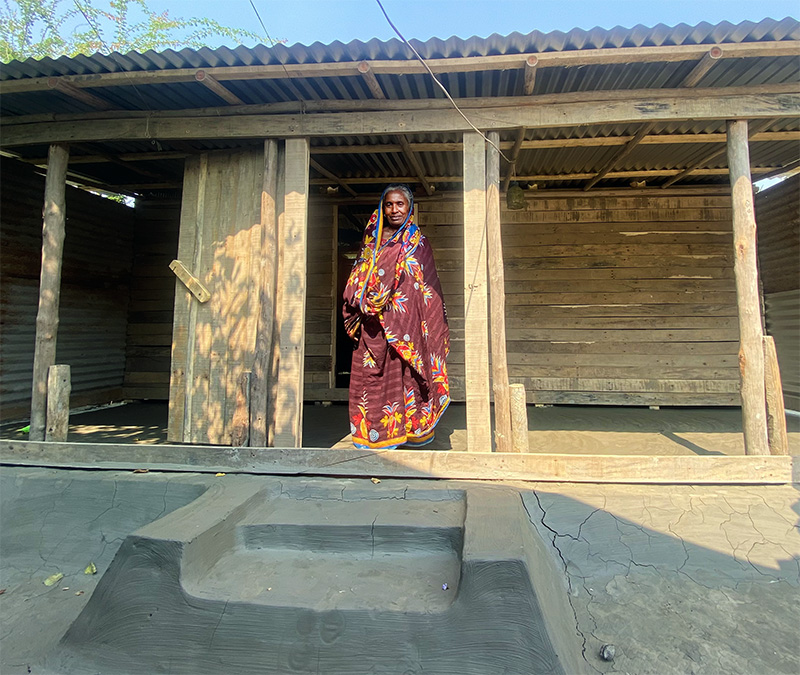
The Community – Investor Framework for Kenya’s Drylands offers a clear, legally grounded process for responsible investment on community land in Kenya’s drylands, drawing on national laws, county planning systems, and established international standards.
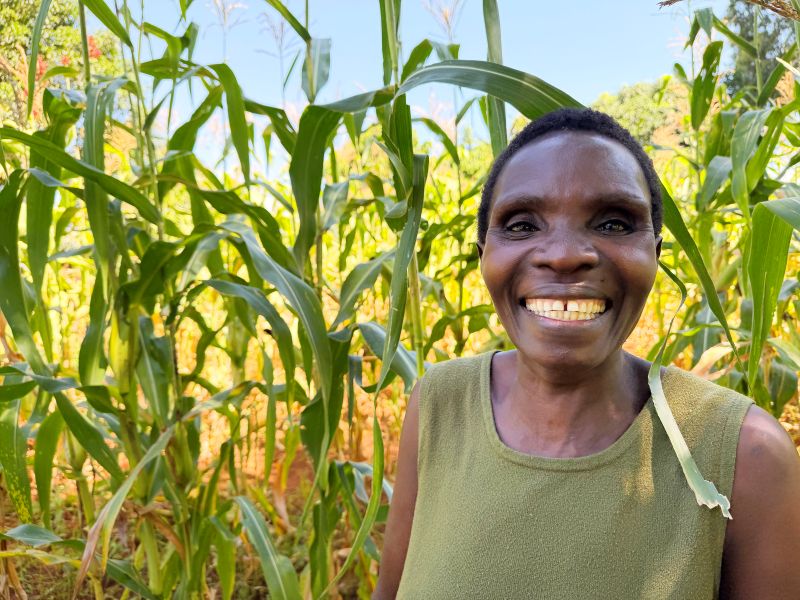
Rebecca Ogalo spent more than two decades fearing she could lose the land she depended on to raise her son, until a Landesa land clinic in Kisumu, Kenya helped uncover the records needed to receive a land title in her name.
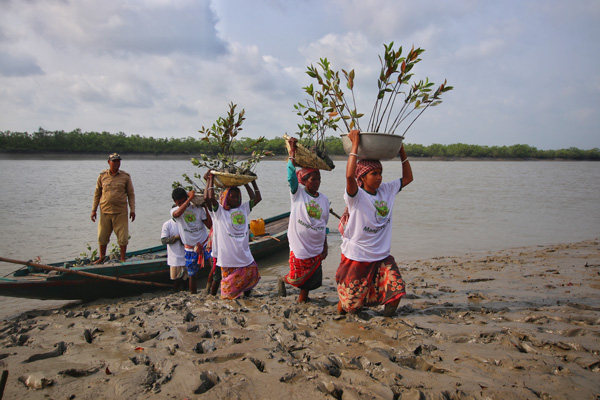
Mangrove forests are among the planet’s most productive ecosystems, supporting livelihoods for hundreds of millions of coastal people while storing vast amounts of carbon. Since 2022, Landesa has partnered with governments, civil society and local communities to strengthen coastal land tenure rights in some of the world’s most vital – and vulnerable – mangrove areas. This ambitious effort is improving outcomes for people and planet through programming that sustains livelihoods, protects mangroves, and mitigates climate change.
Watch a preview from our upcoming Sundance-funded documentary, read up on land rights for rural women, and learn about upcoming Landesa events.
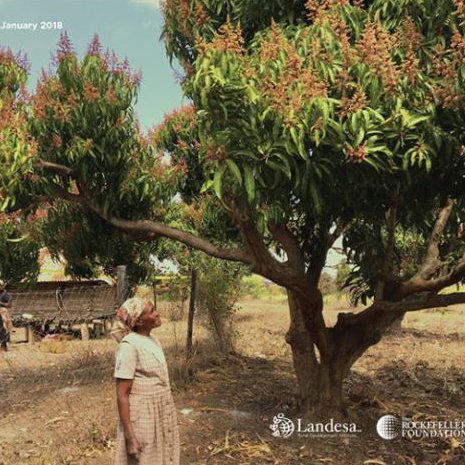
This paper explores the implications of Kenya’s land tenure situation on the Rockefeller Foundation’s Yieldwise initiative in the Kenyan mango value chain.
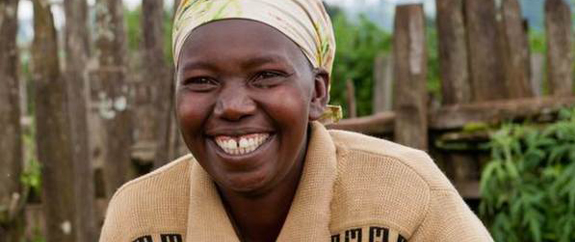
When her husband died in 2009, Gladys Chepkorir had no time to linger on the grief. “Immediately after he died, his family started to ask me for the title deed,” she said. Her mother-in-law told her that in spite of the three daughters Gladys and her husband had together, Gladys’ husband had died “like a tree without limbs, because he died without heirs, without sons.”
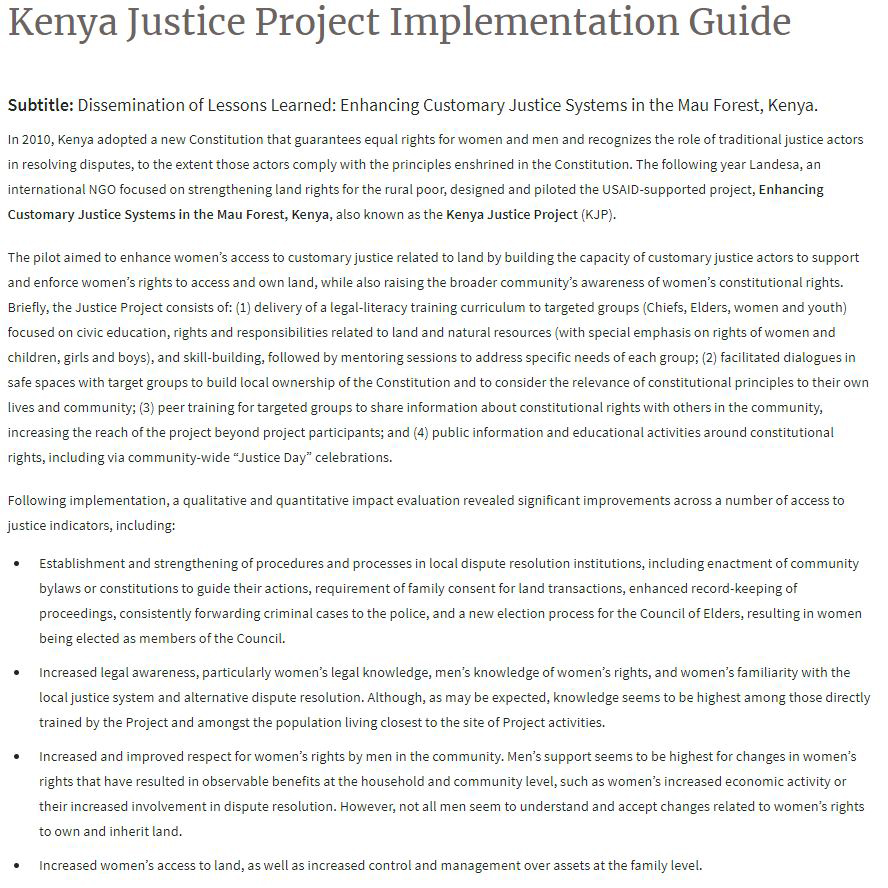
In 2010, Kenya adopted a new Constitution that guarantees equal rights for women and men and recognizes the role of traditional justice actors in resolving disputes, to the extent those actors comply with the principles enshrined in the Constitution. The following year Landesa designed and piloted the USAID-supported project, Enhancing Customary Justice Systems in the Mau Forest, Kenya, also known as the Kenya Justice Project (KJP).
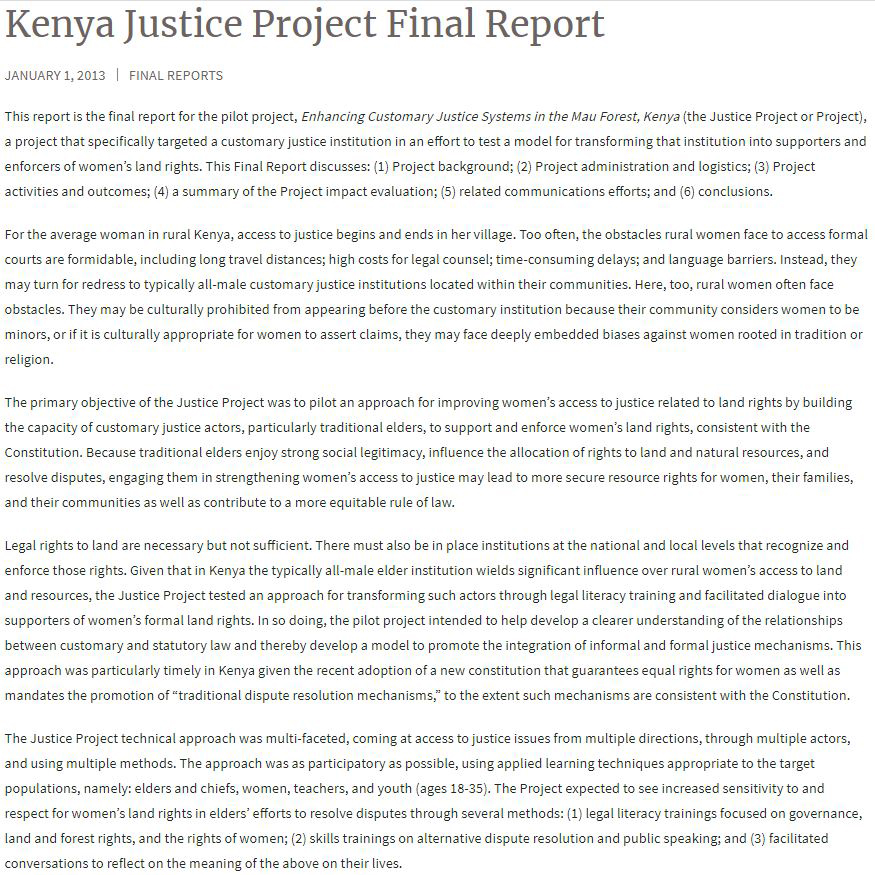
The primary objective of the Justice Project was to pilot an approach for improving women’s access to justice related to land rights by building the capacity of customary justice actors, particularly traditional elders, to support and enforce women’s land rights, consistent with the Constitution.
