





Citations:
To create this infographic, Landesa drew data from a wide variety of sources.
The list below provides our sources in the order in which they appear in the infographic.
- Barriers to women’s equal ownership or access to land data is from OECD’s Social Institutions and Gender Index
- Women and girls’ ownership and inheritance rights data is from the World Bank’s Women Business and the Law 2016
- Customs inhibit women’s access to land data is from OECD’s Gender, Institutions and Development Database 2014
- The number of women who farm is from the International Labor Organization’s Key Indicators of the Labor Market 2015
- The percent of employed women who rely on agriculture is from the Food and Agriculture Organization
- The referenced study in Tanzania on women’s earnings is: Peterman, A. (2011). Women’s Property Rights and Gendered Policies: Implications for Women’s Long-term Welfare in Rural Tanzania. The Journal of Development Studies, 47(1), 1-30.
- The referenced study in Nepal about children’s weight is: Allendorf, K. (2007). Do Women’s Land Rights Promote Empowerment and Child Health in Nepal?. World Development, 35(11), 1975-1988. Chicago.
- The referenced study in Rwanda about soil conservation is from: Ali, D. A., Deininger, K., & Goldstein, M. (2014). Environmental and gender impacts of land tenure regularization in Africa: pilot evidence from Rwanda. Journal of Development Economics, 110, 262-275.
Related resources
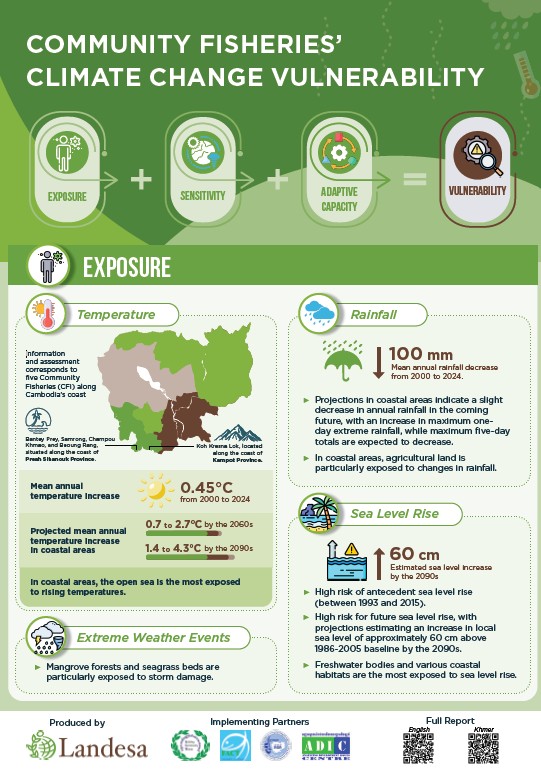
Community Fisheries’ Climate Change Vulnerability Infographic (English and Khmer versions)
These infographics reflect Landesa’s findings from the Community Fisheries Climate Change Vulnerability Assessment report and were developed as primary tools for raising awareness through educational events conducted with Community Fishery members in Cambodia.
Infographics
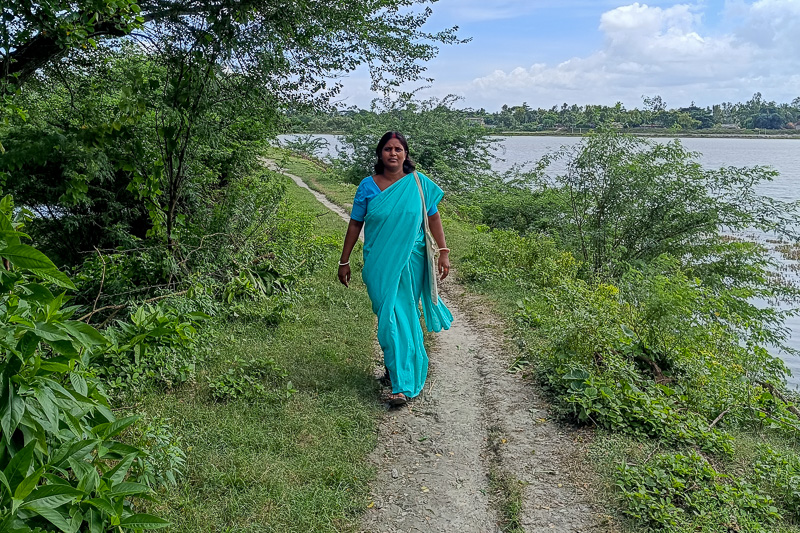
From Struggle to Stewardship: A Woman Leading Change in the Sundarbans
After Cyclone Aila destroyed her home, Supriya Mondal lost nearly everything. But the disaster also set her on an unexpected path, one that would turn her into a trusted community leader helping protect the Sundarbans through climate-smart livelihoods and mangrove conservation.
Success Stories
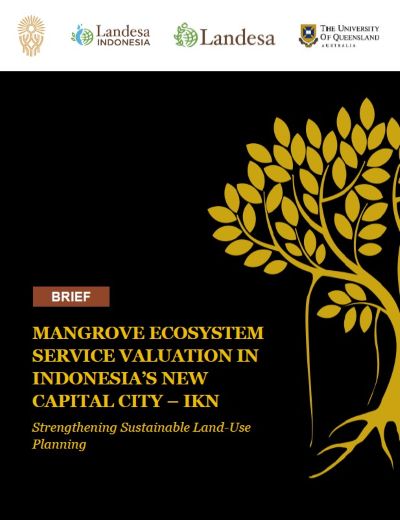
Mangrove Ecosystem Service Valuation in Indonesia’s New Capital City – IKN
This brief highlights how recognizing and integrating the ecosystem services of mangroves into planning decisions—complemented by conservation efforts and sustainable resource use through strengthened tenure rights—is essential to promoting sustainable land use in Indonesia’s intended new capital city.
Landesa Reports, Research
